
Difficulty using a standard joystick doesn't automatically rule out independent powered mobility in a power wheelchair. Alternative powerchair controls offer different ways to drive when hand movement, strength or coordination make conventional controls unsuitable.
The right choice starts with your reliable movements, alongside comfortable seating and practical trials. A control that works briefly in a showroom must also suit your everyday routines.
Start by understanding how the controls respond, then compare them through an individual assessment.
Key Takeaways
- Difficulty using a standard joystick doesn’t rule out independent powered mobility; alternative controls may offer access through more reliable movements.
- Choose controls through an individual specialist assessment, considering movement, posture, fatigue, seating and the complete setup—not diagnosis or a brief demonstration alone.
- Trial the proposed controls during everyday tasks and, where possible, at home. Check comfort, safe stopping, transfers, training and how to get help.
- Before agreeing to a setup, confirm compatibility, funding, what costs and support are included, and who will handle servicing, faults and future adjustments.
Understanding alternative powerchair controls
Power wheelchair drive controls generally fall into two broad categories: proportional and non-proportional. The right alternative drive control depends on the person's reliable movements and a thorough assessment, rather than one category being automatically better. A physiotherapist (physical therapist) should consider these alongside wider assistive technology needs.
Proportional controls allow graded responses
Proportional drive controls let you vary the driving response through your input. A standard joystick is a familiar example of this approach.
For someone who can make controlled, repeatable movements, proportional access may offer useful flexibility. However, assessment must establish whether those movements remain comfortable when the person becomes tired.
Ask the assessor to demonstrate how different proportional drive control settings affect everyday manoeuvres. Turning towards a table may require a different approach from travelling along an open path.
Non-proportional controls use defined commands
Non-proportional controls use defined commands rather than continuously graded input. Switch-based arrangements are one option to discuss when joystick movement is difficult.
The assessment needs to consider how you select directions, change tasks and recover from an unintended input. These demands matter alongside physical access.
Most importantly, don't judge a control by whether you can activate it once. You need to use it reliably throughout the activities that matter to you.
Comparing the main control options
This comparison identifies what to explore during assessment, rather than prescribing a device for a particular condition. Proportional drive controls respond to how far the control moves, while non-proportional options use set commands. Ask a qualified specialist whether the i-drive system is available and compatible with your chair.
| Control option | Access to discuss | Main assessment question |
|---|---|---|
| Mini proportional joysticks | Small, controlled movements at a suitable position | Can you repeat the movement comfortably? |
| Head array | Deliberate head movement | Can seating support consistent access? |
| Individual switches | A reliable movement at an accessible body site | Can you select commands without accidental activation? |
| Chin control | Controlled chin movement | Does the position remain comfortable during daily tasks? |
| Foot control | Repeatable foot movement | Can you use it without compromising posture? |
| Sip-and-puff | Mouth-operated access | Is this approach appropriate and manageable for you? |
The useful comparison is between complete setups, including seating, mounting, programming and support.
A diagnosis alone can't determine suitability. Two people with cerebral palsy may need different controls. Someone with motor neurone disease may also need reassessment as their abilities change.
Head arrays and switches: assess the whole setup
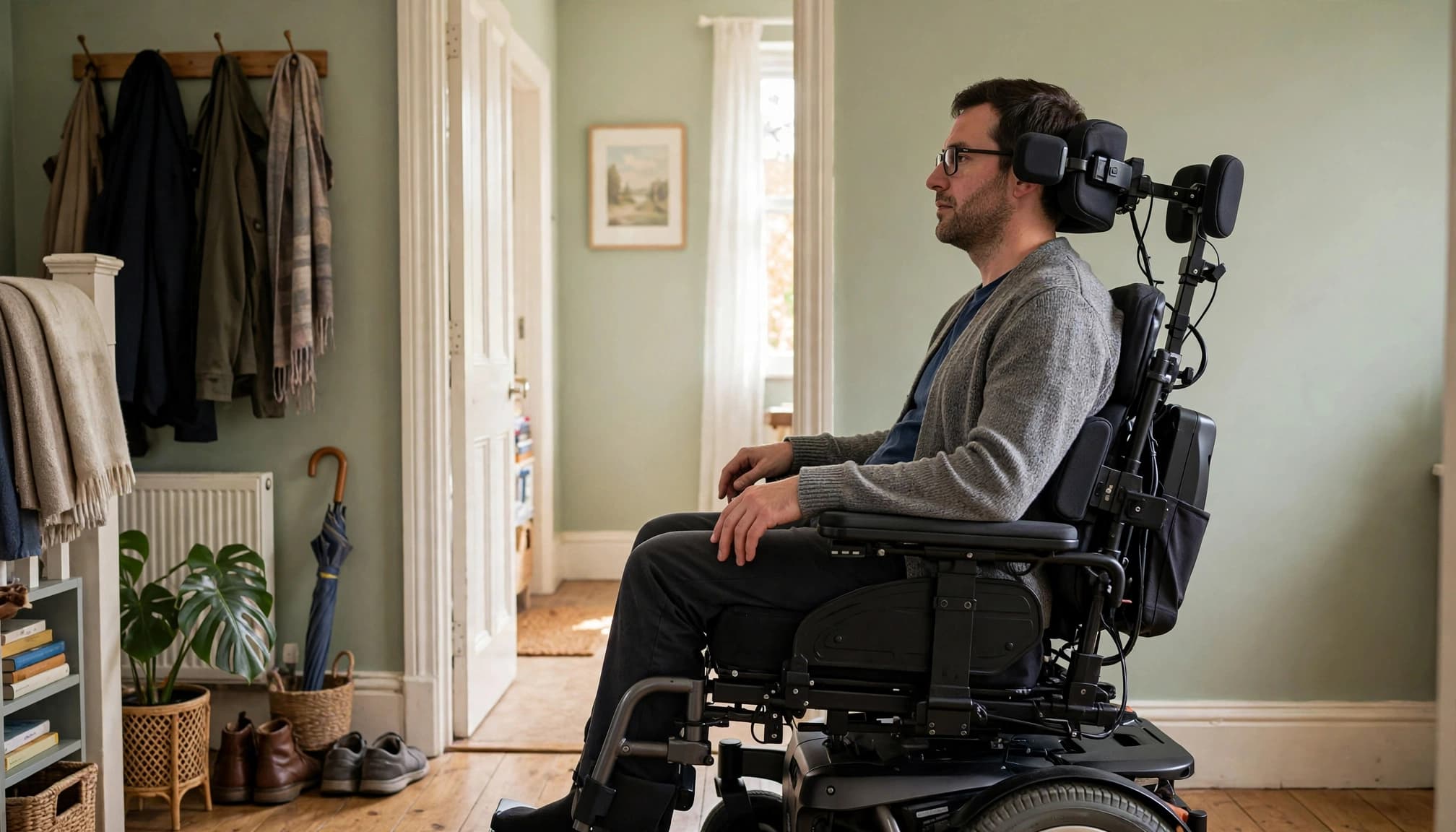
Head array requires careful positioning
A head array provides access around the head rather than through a hand-mounted joystick. It’s an option to discuss when head movement is more reliable than hand movement.
However, choosing the equipment is only part of the process. The assessment should consider head support, comfort and changes in position during the day.
Ask to try the setup while looking around and carrying out ordinary activities. You also need a clear plan for access after repositioning or transfers.
Switch access depends on repeatable movement
Individual switches offer another route to control access. Ask the assessor whether proximity switches are suitable, based on reliable access, the chair and your setup.
Consider clothing, positioning and help from carers. A switch that becomes difficult to reach after a transfer, or activates accidentally, needs further adjustment.
Before ordering, ask for an explanation of the proposed command arrangement. You should understand what each action does, how errors are managed and what training will involve.
Mini proportional joysticks, chin controls and foot controls
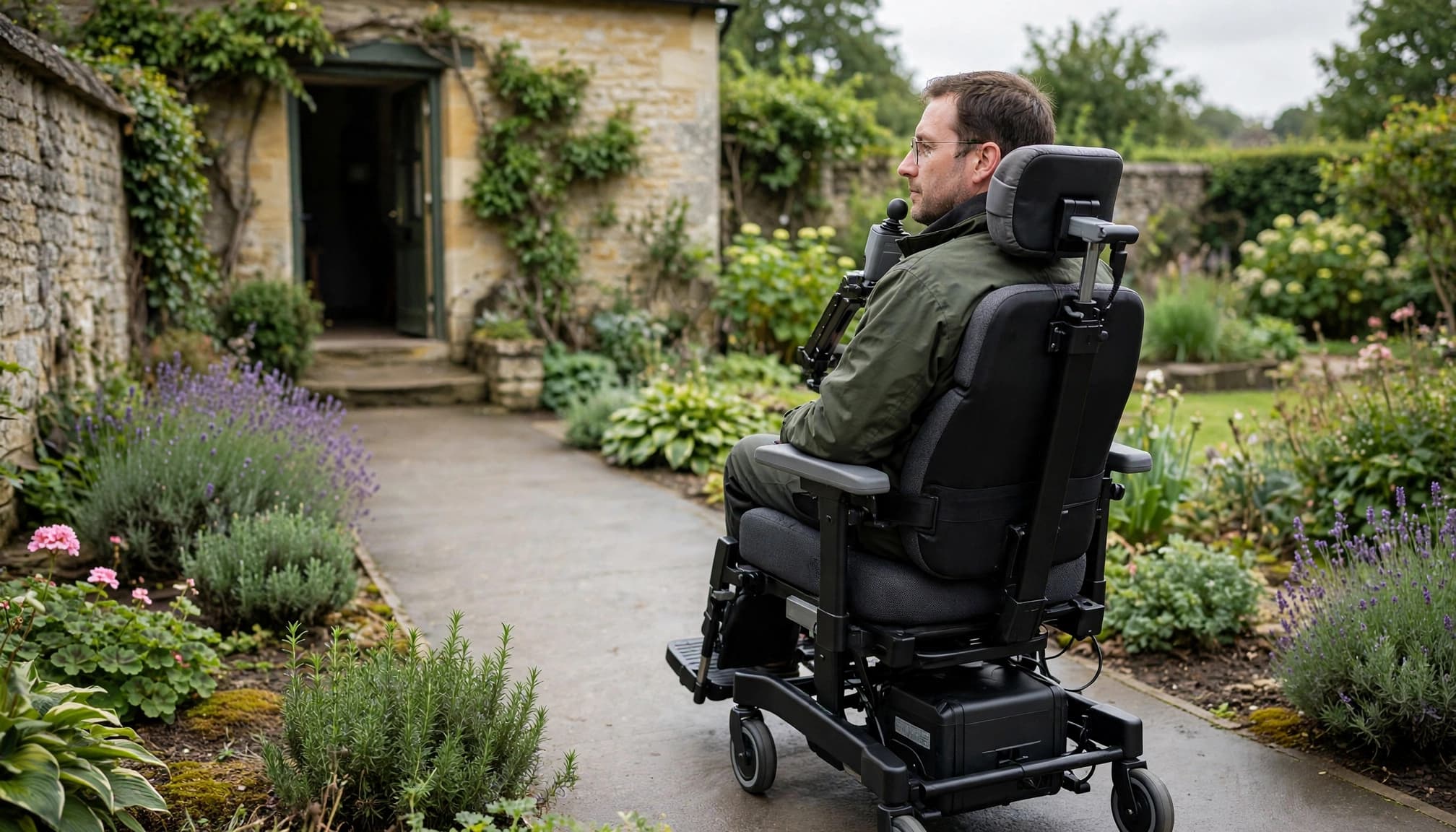
Mini joysticks deserve a practical trial
A mini joystick is a smaller control option, but size alone doesn't determine suitability. Assess the access position alongside the person's movement control.
Compare mounting arrangements for mini proportional joysticks, rather than focusing only on the joystick itself. Support for the arm or another access position can affect comfort and consistency.
Also check the practical consequences. Can you approach a dining table, transfer safely and reach other equipment? Confirm the proposed chair and control combination with the specialist before purchase.
Chin and foot access need everyday testing
Chin control and foot control bring other body movements into the assessment. Neither should require an uncomfortable position simply to keep driving.
With chin control, discuss eating and drinking. Consider how to move chin control clear when needed, and, for foot control, assess footwear, leg support and changes in posture.
A trial should include these ordinary activities alongside driving. Otherwise, a promising demonstration can overlook difficulties that appear only when the equipment becomes part of your daily routine.
What an expert assessment should establish
An occupational therapist, physiotherapist or physical therapist can work with a specialist wheelchair team to assess movement, posture and practical access. Their rehabilitation technology expertise also helps them consider vision, understanding and the support available at home.
The NHS wheelchair referral guidance explains that a GP, therapist or hospital staff member can refer you to your local wheelchair service.
Match access to your abilities
Bring information about your usual day, including fatigue, pain and changes in movement. This helps the occupational therapist assess more than your best performance during one appointment.
If your condition is progressive, discuss future adjustments and which alternative drive control may remain suitable. Ask whether a chin control would suit your movement and posture, and what happens if access becomes difficult.
Family members and carers can contribute useful observations. However, the person using the chair should remain central to decisions about comfort, independence and priorities.
Agree training and safety arrangements
Ask for a supervised trial with a clear training plan. The assessor should explain the proposed proportional drive controls, settings, stopping arrangements and any attendant assistance.
There isn't one trial length that suits everyone. Learning time should reflect your needs and the complexity of the setup.
A successful trial should include a demonstration of how you stop safely and obtain help, not only how you start driving. If linked driving or attendant controls are proposed, confirm the configuration, stopping arrangements and training with the specialist team.
Record what needs adjusting before accepting the final arrangement.
Use home assessments to capture real experience
A home assessment tests whether the proposed setup fits the places you use. Doorways, furniture and turning space can reveal difficulties that an open showroom won't show.
Jim Wood, Motability's Relations Manager for scooters and powered wheelchairs, emphasises that dealer visits help establish customers' requirements. A home-based assessment may also involve a physiotherapist (physical therapist), depending on your needs. If linked driving or attendant controls form part of the proposed setup, ask to test them at home too.
Your first-hand observations are valuable evidence. Record where you struggle, when fatigue appears and which tasks you want to do independently.
Common mistakes to avoid include:
- Choosing a chair before confirming whether it supports the proposed specialist controls.
- Testing only when you're rested, without discussing less comfortable parts of the day.
- Overlooking transfers, charging access or the space needed to move controls clear.
After the trial, describe difficulties in practical terms. For example, identify the doorway where turning was difficult, rather than reporting that the chair felt awkward.
Ask for adjustments and another trial where necessary. A rushed decision can leave an avoidable problem unresolved.
Funding, servicing and longer-term support
Eligible customers can explore the Motability scooter and powerchair leasing options available through Mobility World. The collection provides a starting point for comparing products, but specialist control suitability requires separate confirmation.
Mobility scooters generally use a different steering arrangement from powerchairs. Compare them against your assessed needs rather than assuming either type will provide suitable access.
The Motability Scheme allows eligible people to use a qualifying mobility allowance towards a lease. Mobility World's collection describes three-year leases and five-year terms for complex powerchairs. Confirm current terms for your proposed equipment.
For alternative powerchair controls, request a written breakdown of the complete setup. Establish whether assessments, specialist controls, mounting, training and later adjustments are included.
Aftercare matters too. Motability's powered-wheelchair user advice confirms that annual servicing is included for Scheme customers.
Ask who will inspect the specialist controls and how faults should be reported. If linked driving or attendant controls are part of the setup, confirm who will inspect them and how changes in performance should be reported. Report changes promptly rather than attempting your own adjustments.
Local help from Harrow and Letchworth
Award-winning dealer Mobility World offers a local starting point for product advice and assessment enquiries. Explain that you need specialist control guidance when you get in touch, so the team can discuss the appropriate next step.
For Mobility World Harrow, we welcome enquiries across at least a 10-mile radius, including Wembley, Ruislip, Edgware, Watford and Uxbridge. Call 020 3958 4328.
For Mobility World Letchworth, we welcome enquiries across at least a 35-mile radius, including Hitchin, Stevenage, Bedford, St Albans, Cambridge and Milton Keynes. Call 01462 418478.
These local enquiry areas don't replace postcode confirmation for home visits. Ask about assessment availability, specialist involvement and support for the particular controls you're considering. Describe your usual routes and access conditions, including gradients, kerbs, paving and indoor thresholds, so the assessment can consider the terrain you encounter.
You can also Contact Us with your postcode, current chair details and the activities you're finding difficult.
Frequently asked questions
Can I add alternative controls to my existing powerchair?
That requires confirmation from the wheelchair team or supplier. Don't assume a control will work with your chair simply because it can be physically mounted. Ask for written confirmation before ordering equipment.
Should children wait until they're older?
Age alone shouldn't decide whether to request an assessment. A review of early powered mobility examines interventions for children under five, whilst acknowledging uncertainty about the optimum starting age. Discuss individual goals and supported learning with the child's therapy team.
Can driving controls also support communication access?
Some assistive technology arrangements can support access to communication equipment. If linked driving is being considered, wheelchair and communication specialists must assess the arrangement together. Ask how the person would switch tasks, maintain safe control and receive training.
How much do specialist controls cost?
Request an individual quote rather than relying on a general price. The complete cost depends on the proposed setup and support. For leasing, confirm what is included, any separate charges and responsibility for future changes.
Choose around reliable everyday access
The right control is one you can use comfortably and consistently during ordinary life. Your own experience should guide assessment, alongside clinical advice and supervised trials.
Compare complete setups, confirm funding and establish who will support you after delivery. A difficult standard joystick is a reason to explore better-matched access, with the right people helping you make the decision.


