
A Blue Badge can make parking closer to shops, GP surgeries and town centres easier. It is a parking concession under the blue badge scheme, not permission to use a mobility scooter. You don't need one to lease a scooter through Motability.
The "blue badge motability scooter" question often combines two separate issues: scooter-use rules and eligibility for the Motability Scheme. Having, leasing or using a Motability mobility scooter doesn't automatically qualify you for a Blue Badge. Knowing the difference helps prevent parking mistakes and supports suitable equipment choices.
The Blue Badge Motability Scooter Answer
You don't need a Blue Badge to buy, lease or operate a mobility scooter in the UK. You also don't need a driving licence for a Class 2 or Class 3 scooter.
A Blue Badge is a parking permit. It's separate from Motability leasing, which depends on the Scheme's qualifying allowance rules, not Blue Badge possession.
A Blue Badge does not control scooter use
Choose a mobility scooter that suits your mobility needs, ability and planned journeys. Injury, disability or a medical condition may affect which model is appropriate, but there isn't a universal legal test for using one.
At Mobility World, an award-winning dealer, home assessments often reveal practical issues that are easy to miss in a showroom. Tight hallways, uneven paths and steep dropped kerbs can matter more than a scooter's top speed.
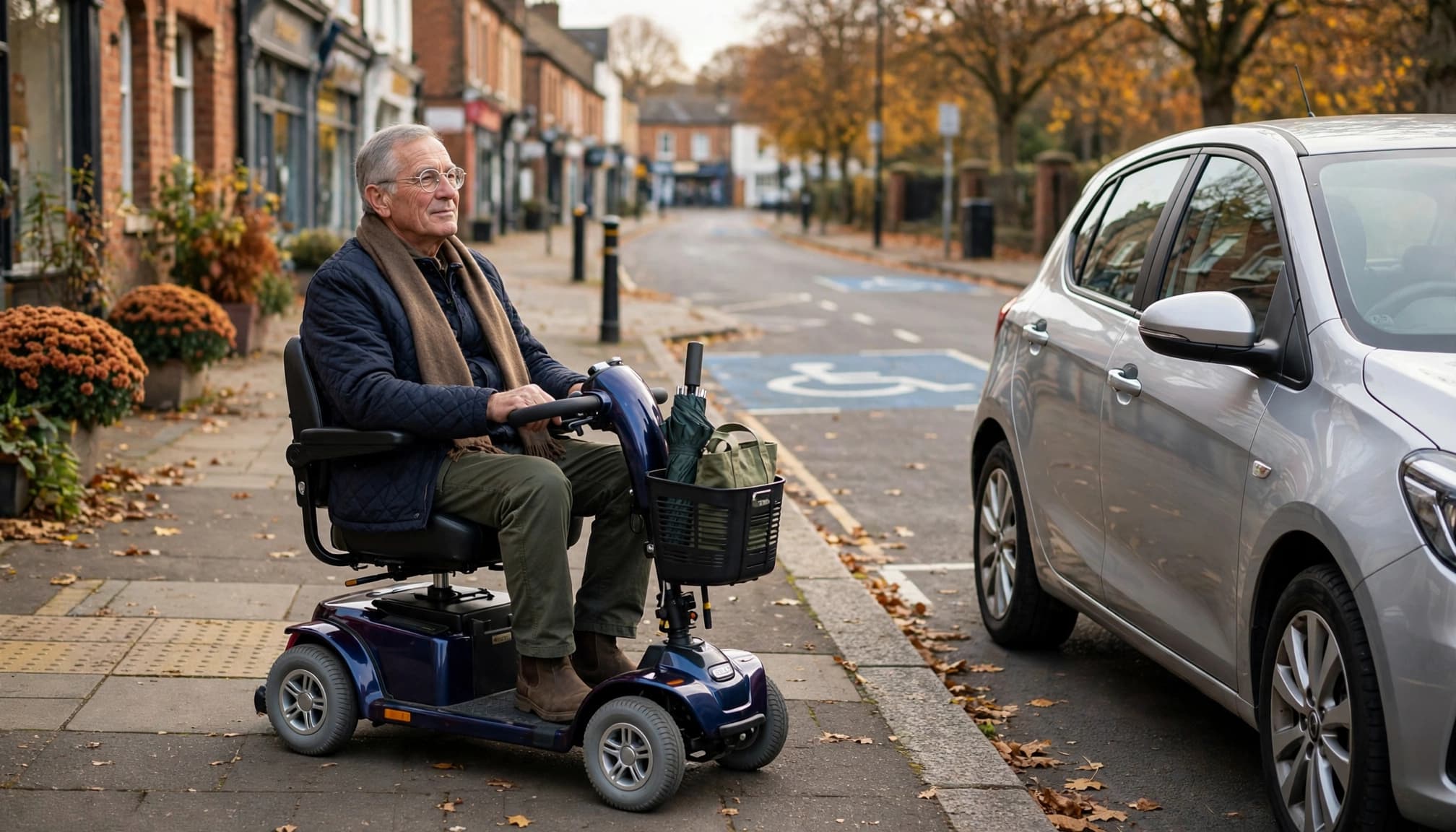
A Blue Badge affects parking privileges
Under the blue badge scheme, a blue badge holder may park nearer a destination as the driver or passenger, provided the badge is displayed and local rules are followed.
The badge belongs to the person, not their car or scooter. Don't lend it to someone else, even if they are collecting shopping or dropping you nearby.
Class 2 and Class 3 mobility scooters
Choosing the correct scooter class matters because road and registration rules differ.
Class 2 mobility scooters suit pavements and short outings
Class 2 scooters have a maximum speed of 4 mph. They are generally intended for pavements, suitable pedestrian areas and everyday local journeys, subject to signs and local restrictions. They don't need DVLA registration.
They are often a sensible option for indoor use, local errands and trips where you need to transport the scooter in a car. However, check the turning circle, storage space and battery range before deciding.
Class 3 mobility scooters can go on roads
Class 3 mobility scooters can travel at up to 8 mph on the road, although they must be limited to 4 mph on pavements. They need lights, indicators, mirrors and a horn.
They must also be registered with the DVLA. Registration is free, but it is a legal requirement and isn't the same as holding a driving licence.
A common mistake is assuming a larger road scooter is automatically better. Its weight, width, turning space, storage needs and battery range may not suit your home or car.
Parking bays, yellow lines and private car parks
Having a Motability scooter doesn't make you a blue badge holder or give you access to every disabled parking space. Parking rules depend on where the space is located.
Public disabled bays usually require a badge
Without a valid Blue Badge, don't assume you can use an on-street parking bay. A public on-street disabled parking space or parking bay commonly requires a valid badge displayed correctly.
The blue badge scheme has different rules across England, Wales, Scotland and Northern Ireland. Restrictions and enforcement also depend on signs, traffic orders and the relevant local authority.
In England and Wales, badge holders can often use on-street pay and display bays without charge and park on yellow lines for up to three hours. Loading restrictions, time limits and local conditions still apply. Check current government and council guidance before leaving your vehicle or scooter.
Private sites set their own rules
Supermarkets, hospitals, retail parks and private car parks set their own terms. Many reserve accessible spaces for Blue Badge holders, while some offer other arrangements for disabled visitors.
A Blue Badge supports parking concessions, but it doesn't override private land rules or signs.
Blue Badge eligibility criteria and applying online
Blue badge eligibility criteria differ between nations, so these examples apply to England only, not the whole UK. You may qualify automatically if you receive the higher-rate mobility component of disability living allowance (DLA), score at least eight points for “moving around” under personal independence payment, are registered blind, or receive certain Armed Forces payments. A Motability scooter or medical condition alone doesn't guarantee Blue Badge eligibility.
Other routes can involve an assessment
You may still qualify if you have substantial difficulty walking, face a serious risk to your health or safety when walking, or cannot undertake journeys because of severe psychological distress. A local authority assesses these applications individually, including cases involving limited mobility.
Use the official Blue Badge application service to check eligibility. If your application relies on personal independence payment, you may need evidence of your award, along with a recent digital photograph, proof of identity and address, and your National Insurance number if you have one.
The blue badge eligibility criteria may change, so check current official guidance before applying. Residents of Wales should use the Welsh Blue Badge application guidance; check the relevant official guidance for Scotland or Northern Ireland too. Your council or national government page should confirm the latest criteria, evidence, fees and renewal rules.
Costs and validity vary by nation
Badges usually last up to three years. They cost up to £10 in England, £20 in Scotland and are free in Wales, but fees and renewal arrangements can change. Check the relevant guidance for current information, including Northern Ireland’s rules.
Motability leasing, insurance and local support
Blue Badge eligibility and Motability eligibility are not the same. A Blue Badge is not a qualifying benefit for a Motability lease. The relevant starting point is a qualifying mobility allowance with at least 12 months remaining.
What a Motability lease includes
The Motability Scooter & Powerchair Leasing Scheme includes mobility scooter insurance, servicing, repairs, breakdown cover, battery replacement and tyre support. The lease's insurance may cover accidental damage, subject to the current Scheme terms.
Only people named for cover may drive the scooter or powerchair. Public liability insurance can help with claims if you accidentally injure someone or damage their property. The insurance included in a Motability lease is separate from public liability insurance arranged elsewhere.
Some separate policies may cover accidental damage, but check their terms carefully. The current insurance policy controls exclusions, named-driver rules and claims procedures. Check whether you need separate public liability insurance, and don't assume it is included.
Holding a Blue Badge doesn't create a universal requirement to notify an insurer. It also doesn't change the insurance arrangements for a Motability lease.
Help near Harrow and Letchworth
Mobility World Harrow supports home assessments within a 10-mile radius, while Mobility World Letchworth covers a 35-mile radius. These visits compare controls, seating, access routes and storage against the person's actual routine.
The workshop team also carries out a 74-point service inspection, including battery connections, tyres, brakes, steering adjustments and a road test. For advice on a lease, servicing or a home assessment, Contact Us.
Choose a scooter around your journey
The right model should fit your home, destination and transport plan.
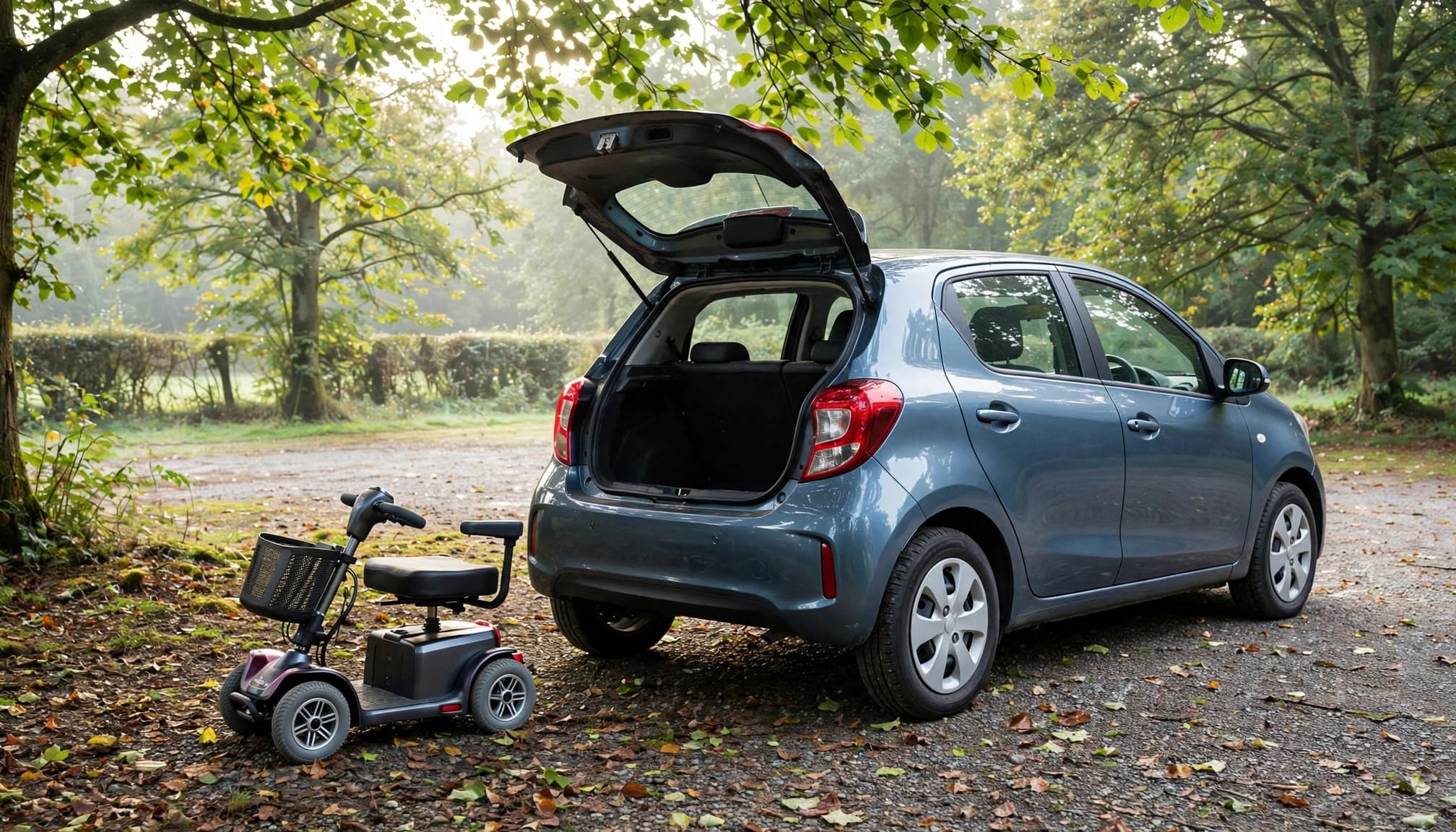
Folding scooters need realistic car-boot checks
A folding mobility scooter can simplify car journeys, but check its folded dimensions against your actual car boot, not marketing photographs. A folding design doesn't guarantee the scooter will be light enough for you or a carer to lift.
Before buying, test the real boot opening, lip height and lifting process with the scooter.
Match the scooter to daily use
Families often ask whether to choose a compact Class 2 model or a larger Class 3 vehicle. The right option depends on your routes, strength, balance and ability to transfer or lift equipment, especially with limited mobility. Blue Badge status doesn't determine suitability, and a scooter isn't a substitute for parking concessions.
Try the controls, seat and manoeuvrability before committing. A home assessment can show whether the scooter clears your doorway and handles your path. It can also help you assess terrain, range, charging space and transport needs.
Key Takeaways
- You don't need a Blue Badge or driving licence to use a Motability scooter.
- A Motability scooter doesn't automatically qualify you for a Blue Badge. The badge and Motability lease are separate decisions.
- A blue badge holder must still follow local signs, restrictions and private car park conditions.
- Class 3 scooters need DVLA registration, while Class 2 scooters don't.
- Check transport, storage and daily routes before selecting a scooter.
Frequently asked questions
Can I park in a disabled parking space without a Blue Badge?
Usually not on public roads. A public disabled parking space generally requires a correctly displayed Blue Badge. On private land, follow the operator's signs and conditions. A Motability scooter doesn't automatically confer Blue Badge eligibility.
Does a blue badge Motability scooter need insurance?
Mobility scooter insurance isn't a general legal requirement for ordinary Class 2 or Class 3 scooters. However, a Motability lease has its own insurance arrangements and conditions. Check the policy wording, including exclusions and accidental damage cover.
Does having a Motability scooter automatically qualify me for a Blue Badge?
No. Motability scooter users must meet the separate Blue Badge eligibility rules. Check the latest national guidance and your council's current application requirements.
Can a folding mobility scooter fit in any car boot?
No. Measure the scooter and the boot, including the opening and lip height. Some models fold, while others separate into lighter pieces for transport.
A practical way to decide
A Blue Badge can make journeys less tiring by improving parking access, but it isn't a licence for a scooter. Treat Blue Badge eligibility, scooter suitability and Motability leasing eligibility as three separate decisions.
A blue badge holder must follow local signs, yellow-line restrictions, loading restrictions and private car park conditions. Parking rules vary across England, Wales, Scotland and Northern Ireland.
When the scooter fits your home, routes and transport, it becomes a dependable part of everyday independence. A Motability scooter doesn't replace a Blue Badge.


