


Mobility World guide • Motability adaptations advice • Harrow & Letchworth showrooms • Trading since 1990
Choosing Motability Adaptations When Hand Strength Is Limited
The Quick Answer: If limited hand strength makes driving tiring or painful, start by listing the exact tasks that feel difficult, then speak to a Motability adaptations installer before ordering a vehicle. Options include push-pull hand controls, steering aids, swivel seats or transfer plates, and boot hoists for stowing a scooter or wheelchair. A home assessment confirms the vehicle, seating and adaptation all work together on your hardest days, not just in a showroom demonstration — and Mobility World's Harrow and Letchworth showrooms can also help if a scooter or powerchair turns out to be the better fit.
Limited hand strength can turn a short drive into a tiring, painful task. The right Motability adaptations can reduce the effort needed to steer, brake, transfer into a seat or load mobility equipment, without asking you to push through discomfort.
A good choice starts with the task that causes difficulty, not the name of a diagnosis. Your grip may be weaker in the morning, affected by arthritis or reduced after a stroke, so the vehicle and adaptation need to work on your hardest days too.
Start with the tasks that feel difficult
Before looking at vehicles, write down what happens from leaving home to arriving at your destination. Include the points where you need another person's help, feel pain or lose confidence.
Separate grip problems from reach and fatigue
Hand strength is only one part of driving comfortably. Some people can grip a steering wheel but cannot hold it through a long turn. Others can press a button but struggle with the repeated pulling motion of a hand brake.
Notice whether the difficulty is caused by:
- Holding, twisting or pulling controls.
- Reaching across the body to use switches or seat belts.
- Maintaining a grip for more than a few seconds.
- Moving from a wheelchair, walking aid or scooter into the vehicle.
- Lifting a folded wheelchair or mobility scooter into the boot.
A clear list helps an adaptations installer recommend equipment that suits your body, rather than a generic option.
Consider the whole journey
A hand control may make acceleration easier, yet the journey can still be impractical if you cannot release the wheelchair brakes, close the boot or fasten the seat belt. Equally, a boot hoist may protect sore wrists but only if the item fits safely in the chosen vehicle.
The best adaptation reduces strain at every repeated movement, including the ones made before the engine starts and after it stops.
Ask a family member or carer to observe a usual journey. They may spot a movement you have learned to work around, such as bracing against a door while transferring or using two hands to turn a key.
Motability adaptations for limited hand strength
The official range of Motability adaptations includes driving controls, accessibility aids and equipment for stowing mobility devices. There are many options, but vehicle compatibility must be checked before selecting an adaptation.
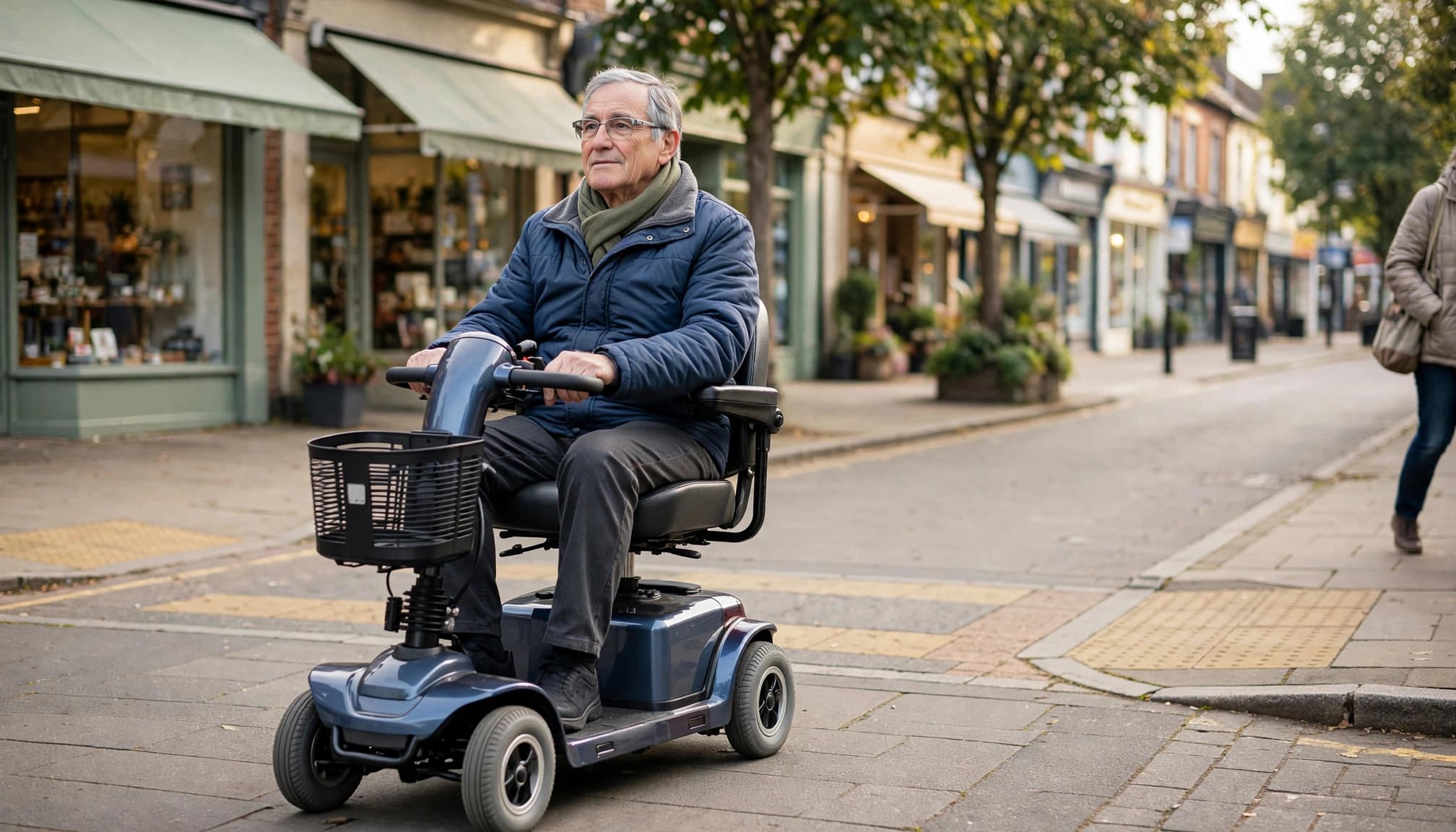
Hand controls and steering aids
Push-pull hand controls can allow a driver to manage acceleration and braking without relying on foot pedals. However, the force needed, handle position and range of movement vary between systems.
Steering aids may also help where grip is weak or a hand has limited movement. A steering wheel ball, for example, can make one-handed turning easier, but it must be positioned and fitted correctly. Indicators, wipers and other secondary controls may still need consideration.
A left-foot accelerator may be relevant where lower-limb pedal use is also affected, but an adaptations installer must assess whether it's suitable. Try each control with the seat set to your normal driving position, not only during a quick demonstration.
Access aids that reduce strain
Swivel seats and transfer plates can make getting into the vehicle less demanding. A transfer plate provides a stable surface to move across, whilst a swivel seat turns towards the door before you stand or transfer.
Some seats offer powered movement and lowering functions, while others are manually operated. An electric person hoist is designed to support a transfer into the vehicle, unlike a boot hoist. Specialist assessment is essential, including checks that the vehicle can accommodate it.
The practical difference depends on the exact product, your transfer method and the vehicle's door opening. Ask the installer to demonstrate the controls with you seated, then practise the full transfer.
Hoists and simpler stowage
Boot hoists lift a wheelchair, scooter or powerchair into the vehicle, which can remove a risky lifting task. A lighter folding chair, a docking system or a differently shaped boot may be a better answer for some people.
Don't choose a hoist on lifting capacity alone. Check the lift height, the room needed to swing the equipment into place and whether you can operate the controls with limited hand strength.
Some powered hoists and access systems use remote control devices. Test the button size, operating force and reach before choosing one.
Why an installer assessment comes before ordering
Vehicle choice and adaptation choice are tied together. The assessment confirms vehicle compatibility between the chosen model, seating position, boot space and adaptation. If you need to remain seated in your wheelchair, a wheelchair accessible vehicle may be more suitable than a standard car with transfer adaptations.
Test the person, vehicle and adaptation together
You should speak to an adaptations installer before ordering a vehicle. They can check seating position, pedal reach, door clearance, boot space and the practical effort needed to operate each control.
Where needs are complex or changing, a Driving Mobility assessment may be appropriate. Take your walking aid, wheelchair or daily equipment to the appointment. If a relative usually assists you, ask them to attend too, because they understand the real routine.
Use a home assessment to expose practical issues
A showroom test is useful, but it cannot show a narrow driveway, a sloping path or the turning space inside your hall. Mobility World is an award-winning dealer offering home assessments across at least a 10-mile radius around Mobility World Harrow and at least a 35-mile radius around Mobility World Letchworth. Availability depends on confirming your exact location and requirements. The Harrow area includes Pinner, Stanmore, Edgware, Ruislip, Northwood and Wembley, while the wider Letchworth area includes Hitchin, Stevenage, Baldock, Royston, Welwyn Garden City, Hertford, St Albans and Biggleswade.
A home visit can reveal Harrow’s slopes, kerbs, narrow suburban driveways and turning constraints. Around Letchworth and nearby Hertfordshire towns, it may also show uneven pavements, gradients and country-lane approaches.
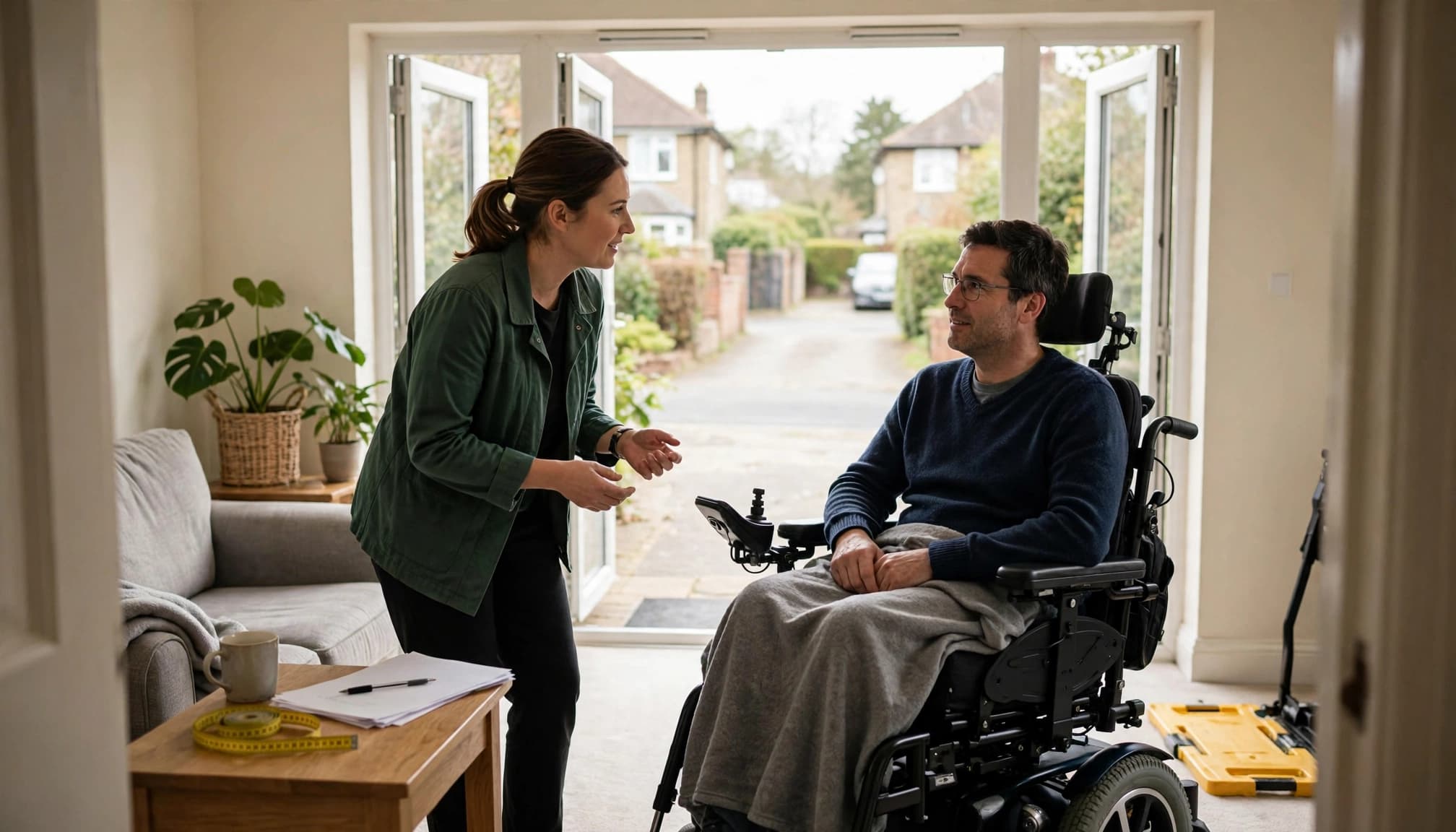
During a visit, ask to try the equipment after sitting down, standing up and moving around the property as you normally would. A customer may find a scooter easy to steer in a showroom, yet difficult to turn through their own gate or park beside the front door.
Check eligibility and plan the order
For a car lease, the mobility allowance can belong to the disabled person or a nominated driver. A valid UK driving licence is required for the person who will drive. The eligibility for the Motability Scheme includes the Enhanced Rate Mobility Component of Personal Independence Payment, Higher Rate Mobility Component of Disability Living Allowance, War Pensioners' Mobility Supplement and Armed Forces Independence Payment.
Allow enough time for adaptations
Order the vehicle only after the assessment confirms which adaptations it needs. Assess the car as a complete setup, including factory-fitted features, rather than choosing it for appearance or headline specification alone. Compare the vehicle's advance payment with the cost and practicality of the required adaptations.
The dealer, installer and Motability Scheme need to coordinate the work, and last-minute changes can delay delivery.
Keep a record of the agreed equipment, any extra cost and who is arranging each step. Ask how servicing, repair and warranty work will be handled once the equipment is fitted.
Avoid common ordering mistakes
The most expensive mistake is choosing the car first because it looks appealing, then finding it cannot take the required equipment. Other problems include testing controls only briefly, overlooking boot access and assuming a spouse or carer can use specialised driving controls without checking.
If another person may drive the car, discuss this with the installer and insurer before the order is finalised. The controls, training needs and insurance arrangements must all be suitable.
Costs, grants and changes during a lease
Many standard Motability adaptations are available with no additional cost when arranged at the start of a lease. More involved work, including complex boot hoists and advanced driving systems, may require an extra payment.
Get an individual cost for your setup
There is no single price that applies to every hand control or boot hoist. The final cost depends on the equipment, the vehicle, installation requirements and any work needed to make the system safe.
Ask for the quotation in writing. It should separate the adaptation cost, fitting work and any advance payment for the vehicle. This makes it easier to compare suitable options without sacrificing the support you need.
Help when needs have changed
The Motability Foundation may offer grants for essential vehicle adaptations, including help with an advance payment, access aids, stowage equipment or driving controls. A grant application may require evidence of the proposed vehicle, adaptation, assessment and individual circumstances.
For people who need to transfer inside the car, drive from a wheelchair or use high-tech controls, the Foundation's Independent Driving Solutions grant may be relevant. Support is subject to eligibility and assessment, so it should never be treated as automatic funding.
Act early if your grip becomes weaker
Progressive conditions can change what feels manageable. If you begin gripping the steering aid too tightly, struggle with the hand control or rely more heavily on someone else, contact Motability before arranging alterations.
Adaptations added during a lease need Motability's approval first, and you pay the installer directly. Ask who handles fitting, servicing, repairs and warranty work. Also ask whether the existing equipment can be adjusted, whether a reassessment is needed and if the adaptation could transfer to your next vehicle.
When a scooter or powerchair is the better fit
A car with adaptations isn't the only route to independence. If driving is no longer comfortable, or journeys are mainly local, a powered wheelchair or mobility scooter may reduce physical effort.
Compare routes, surfaces and controls
Smaller mobility scooters can suit short pavement journeys and indoor storage. Larger road-capable models offer greater outdoor stability, but need enough space to park, charge and turn safely.
Try the tiller, throttle and brake controls long enough to notice hand fatigue. Check whether the seating supports your posture and whether you can manage charging independently. Mobility World's service team also carries out a 74-point inspection, covering battery connections, tyres, brakes and steering adjustments.
Think about the routes you use most. Near Harrow, Pinner and Ruislip, kerbs, slopes and busy suburban pavements may affect your choice. Around Letchworth, Hitchin and Stevenage, longer pavements, gradients and uneven Hertfordshire routes may matter more.
Lease support can reduce running worries
The Motability Scooter & Powerchair Leasing Scheme offers eligible customers a new scooter or powered wheelchair in exchange for their qualifying mobility allowance. Insurance, servicing, routine maintenance, breakdown support, battery replacement and tyre replacement are included.
Mobility World Letchworth & Mobility World Harrow can help you compare models and arrange a home-based demonstration within their assessment areas. Ask the team to confirm whether your home location is covered. A familiar route should test the controls, turning space, surfaces and charging routine in realistic conditions.
A choice built around comfort and safety
The right adaptation should make everyday movement less tiring, not introduce a new set of awkward movements. Start with the difficult tasks, test the complete journey and involve an installer before the vehicle is ordered.
As hand strength changes, revisit the setup early. Comfortable control is what keeps a vehicle, scooter or powerchair useful for the journeys that matter to you.
Helpful Mobility World resources
- Mobility scooters – browse all models
- Class 2 pavement mobility scooters
- Class 3 road mobility scooters
- Portable boot scooters
- Folding mobility scooters
- Approved used mobility scooters
- Motability leasing options
- Support and servicing via our Letchworth hub
- Support and servicing via our Harrow hub
- Free expert advice
- Contact us
About Mobility World
Mobility World is a UK mobility equipment specialist serving customers since 1990 through showrooms in Harrow and Letchworth Garden City.
Our team helps customers choose mobility scooters, powerchairs, adjustable beds and daily living aids through suitability assessments, home delivery, installation and ongoing servicing and repairs.
Visit our showrooms:
- Harrow showroom – 78-80 Station Road, Harrow, Middlesex HA1 2RX
- Letchworth showroom – Birds Hill, Letchworth Garden City, SG6 1HX
Customers can test equipment in store or arrange home assessments across Hertfordshire, Bedfordshire, Cambridgeshire, North London and North West London.
Why Trust Mobility World?
Since 1990, we have been far more than an online retailer. Our advice is backed by:
- Physical Showrooms: Visit us in Harrow or Letchworth for hands-on demonstrations and expert guidance.
- Trading Standards Approved: Buy with Confidence — independently verified consumer protection.
- Driving Mobility Approved: PWMS Trained and Accredited — recognised professional standards in powered wheelchair and mobility scooter assessment.
- Expert Engineers: Our own mobile engineers provide lifetime support, servicing and repairs — not third-party contractors. That means accountability and continuity of care.
- 0% Finance Available: Spread the cost with interest-free finance options on selected products.
- Price Match Promise: Found it cheaper elsewhere? We'll match it — see our Price Match Promise.
Ready to talk through your options?
Speak to the Mobility World team about a home assessment, or browse the Motability Scooter & Powerchair Leasing Scheme if a car is no longer the right fit.
Questions people ask about Motability adaptations
Can I choose adaptations after the car has arrived?
You can sometimes add an adaptation during the lease, but you must contact Motability first. The installer will assess the vehicle and you pay them directly, so planning before ordering is usually easier.
Are manual swivel seats better than powered lowering seats?
Neither option suits everyone. A manual seat may work for someone with reliable upper-body strength, whilst a powered system may reduce physical effort. An installer should show how each product works in the chosen vehicle before you decide.
Can another driver use a car with hand controls?
Don't assume they can. The installer, insurer and anyone who may use the car should confirm what is safe, permitted and covered before the vehicle is driven.
What if I do not qualify for the Scheme?
You can still buy mobility equipment privately or discuss other funding routes. For a practical comparison of scooters, powerchairs and home demonstrations, Contact Us to speak with the Mobility World team.
Frequently asked questions — Mobility World support
Does Mobility World arrange home assessments for scooters and powerchairs?
Yes. Mobility World offers home assessments across at least a 10-mile radius around the Harrow showroom and at least a 35-mile radius around the Letchworth showroom, subject to confirming your exact location and requirements.
Can I lease a mobility scooter or powerchair through Motability with Mobility World?
Yes. The Motability Scooter & Powerchair Leasing Scheme offers eligible customers a new scooter or powered wheelchair in exchange for their qualifying mobility allowance, with insurance, servicing, maintenance, breakdown support, battery and tyre replacement included.
Is VAT relief available on mobility scooters and powerchairs?
Most mobility scooters, powerchairs and related equipment qualify for VAT relief when bought by someone with a qualifying disability or long-term illness. Mobility World's team can talk you through eligibility.
Does Mobility World offer 0% finance on scooters and powerchairs?
Yes. 0% finance options are available, alongside the Price Match Promise, to help make the right equipment affordable.
Can Mobility World service or repair a mobility scooter or powerchair?
Yes. Mobility World provides repairs and servicing support, including the 74-point inspection covering battery connections, tyres, brakes and steering adjustments described in this guide.
How do I contact Mobility World's Harrow or Letchworth showroom?
You can reach the team via the Contact Us page, or visit the Harrow showroom at 78-80 Station Road, Harrow, Middlesex HA1 2RX, or the Letchworth showroom at Birds Hill, Letchworth Garden City, SG6 1HX.
Final step: assess, compare and book locally
Motability Scooter & Powerchair Leasing | Shop Boot Hoists | Book a Home Assessment
For local support: Mobility World Harrow hub and Mobility World Letchworth hub.
Expertise Verified By: PS
Reviewed by the Mobility World Specialist Team
Based on 35+ years of hands-on experience in our Harrow and Letchworth showrooms, Buy with Confidence trading standard approved, and Driving Mobility PWMS trained and approved


