
Yes, you can take a Motability scooter on many UK ferry services, provided the vessel can accommodate it safely. Acceptance depends on your scooter's size, weight and battery, alongside the boarding arrangements for your crossing.
A Motability lease doesn't automatically guarantee ferry access, but booking assistance early helps make the journey more manageable. Start by separating the ferry's requirements from the insurance and support included with your lease.
Key takeaways
- Include your scooter and assistance needs when booking, whether you're travelling by car or as a foot passenger.
- Supply the scooter's dimensions, total weight and battery details, rather than describing it simply as a travel scooter.
- Overseas insurance and breakdown arrangements differ from the support available in the UK.
What ferry rules apply to a Motability scooter?
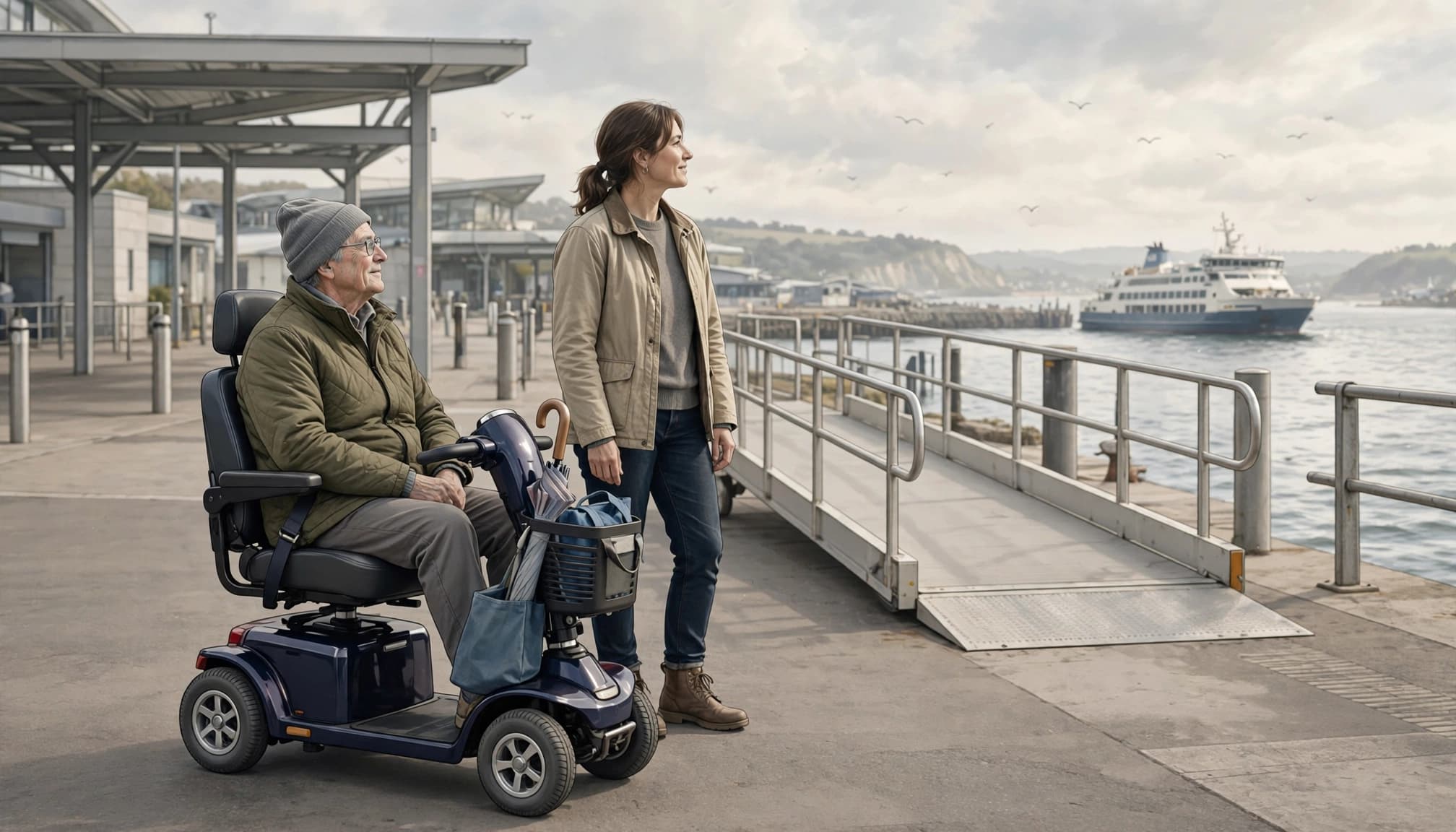
Your lease and ferry booking are separate
The ferry operator decides whether its ship, boarding equipment and passenger areas can accommodate your scooter. These requirements apply whether you own your scooter or lease it.
Our Motability scooter and powerchair leasing range includes options for different everyday needs. However, a scooter that suits pavements may not be suitable for a particular ferry.
The Scheme's all-inclusive scooter lease package includes insurance, servicing, maintenance and breakdown assistance. Ferry carriage is a separate arrangement, and overseas support is limited.
UK crossings and overseas journeys differ
A domestic crossing and a sailing to France or the Netherlands have different insurance considerations.
Motability's overseas scooter travel guidance allows scooters and powered wheelchairs abroad for up to 30 days in total within a 12-month period. It also states that legal expenses and breakdowns aren't covered abroad.
The package includes European insurance use within its stated terms, but it doesn't provide overseas recovery if your scooter stops working. Keep your lease and insurance documents accessible, along with your ferry booking and assistance arrangements.
Book your scooter and assistance together
Give useful measurements
Include the make and model, length, width and weight with batteries fitted. If you'll use a lift whilst seated, include your weight too.
Describe the scooter as it will travel. Folded dimensions matter for stowage, but unfolded dimensions matter if you'll ride it through the terminal or onto the ship.
Also provide the battery type and explain whether the scooter folds or dismantles. These details help the operator plan appropriate boarding and storage arrangements. A description such as "small mobility scooter" leaves too much uncertainty.
Keep the same information available for your return crossing, especially if a different vessel operates that sailing.
Describe the assistance you need
Explain whether you can walk short distances, climb steps or transfer into another seat. Request lift access, suitable parking or boarding assistance as part of the reservation.
Under P&O Ferries' booking terms, passengers needing assistance should notify the company when booking or at least 48 hours before departure. Don't treat that notice period as a universal rule for every ferry service.
Keep the written assistance acknowledgement with your travel documents. Specify needs for both outward and return sailings, including any accessible accommodation.
Your explanation should describe what you need help with, rather than relying on the name of a condition or a Blue Badge.
Travelling by car versus boarding on your scooter
Taking the scooter in a car
A scooter carried in your car still affects your ferry arrangements. You may need room beside or behind the vehicle to unload it, plus a parking position near a suitable lift.
Describe those needs when booking. A standard parking space may leave insufficient clearance for a hoist, ramp or someone helping you transfer.
During the crossing, most enclosed vehicle decks aren't available to passengers. Take medication, essential equipment and anything needed for the sailing upstairs with you.
If the scooter stays in the car, plan how you'll reach the passenger accommodation and move around there.
Boarding as a foot passenger
Travelling without a car doesn't necessarily mean you can ride directly aboard. The route may involve a terminal transfer, passenger gangway or another boarding arrangement.
Your booking needs to account for that whole sequence. Include any difficulty transferring into a shuttle vehicle or walking between the terminal and ship. For a connecting train, check the rail operator's journey planner separately. Ferry access arrangements don't confirm rail access.
Once aboard, follow the crew's instructions about scooter use, parking and securing. Leave corridors, emergency exits and access to safety equipment clear.
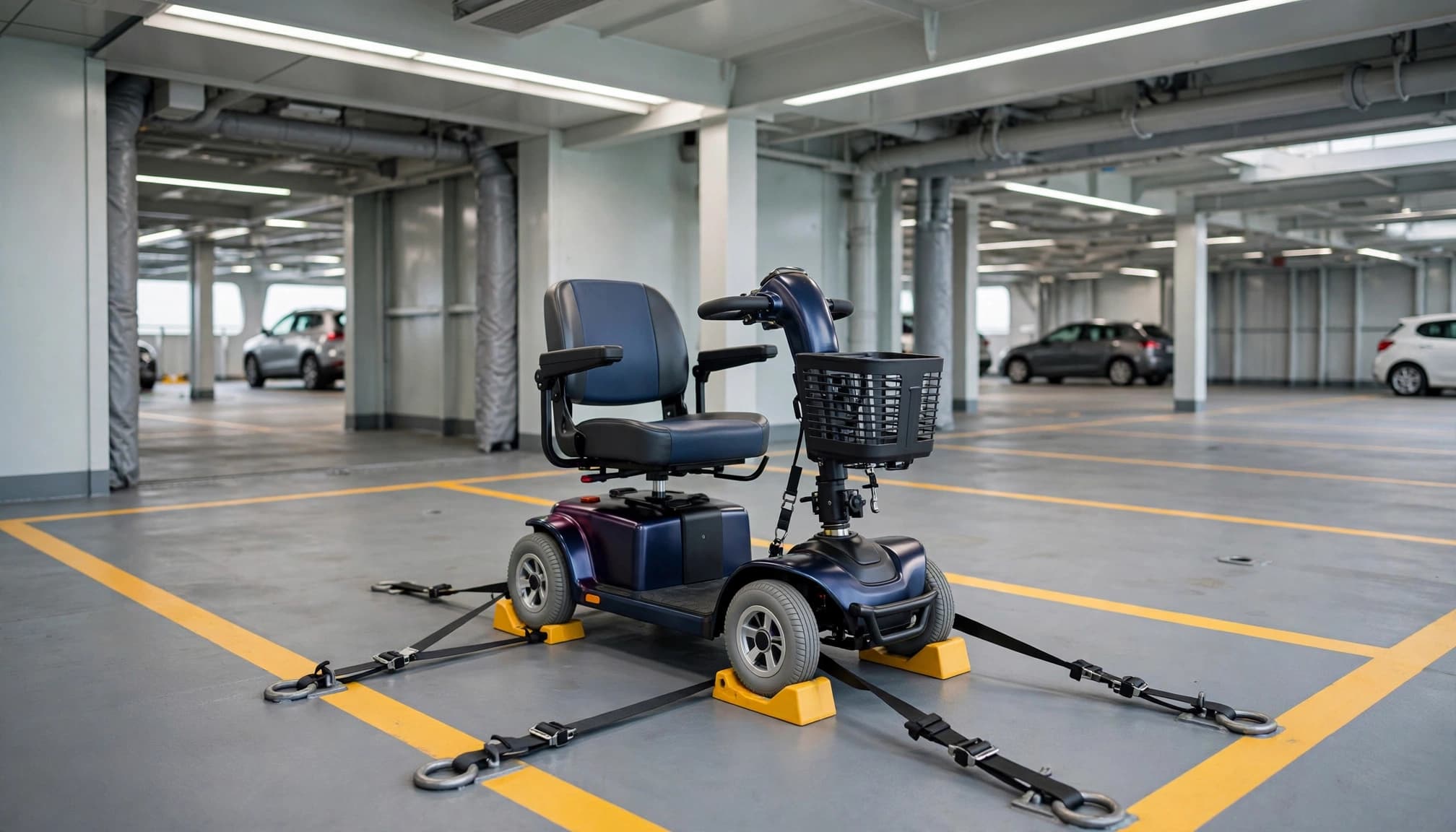
Stowage arrangements depend on the vessel. Don't assume that another passenger's experience on a different crossing describes what will happen on yours.
Which mobility scooters are easier to travel with?
A compact scooter can simplify car loading, but comfort and safe transfers still matter.
| Scooter type | Potential travel advantage | Practical consideration |
|---|---|---|
| Folding or dismantling scooter | Easier storage in a suitable car | Folded size doesn't describe its boarding footprint |
| Pavement scooter | May balance everyday comfort with manageable dimensions | Turning space and loaded weight still matter |
| Larger road-going scooter | More space and comfort for some users | Greater size can restrict lifts and boarding routes |
Compare mobility scooters around your everyday mobility needs first, then assess the complete holiday journey.
P&O publishes a 94 cm lift-door width and 140 cm lift depth for Hull to Rotterdam. These are lift measurements, not general scooter acceptance limits. They also don't describe the space needed to turn into the lift.
For a useful demonstration, practise slow turns, reversing and getting on and off. The scooter that fits the car must also suit its rider.
Prepare the scooter before departure
Servicing and battery preparation
A ferry trip can involve lengthy terminal distances and waiting periods. Start with a charged battery, following the manufacturer's charging instructions, and carry the correct charger for your stay.
Our 74-point servicing inspection covers batteries and connections, wheels and tyres, braking, steering adjustments and a road test. These are useful preparation areas when planning a longer journey.
Our mobility scooter maintenance guidance also explains routine care. Reduced range, damaged cables, unusual noises or weaker braking need attention before travelling.
Mistakes that make boarding harder
Leaving the charger behind can disrupt the holiday even when boarding goes smoothly. Similarly, measuring the scooter without its usual basket or accessories can understate its travelling size.
Don't assume you can charge onboard. Use only charging arrangements authorised by the crew, and keep cables out of walkways.
Ferry battery requirements aren't interchangeable with airline rules. Carry the battery information from your scooter documentation, rather than applying an airline baggage allowance to a sea crossing.
Local advice in Harrow and Letchworth
As an award-winning dealer, we offer scooter comparisons, home assessments, servicing and aftercare. For ferry travel, our recommendation is to discuss the whole journey during your assessment, including car loading and transfers.
Mobility World Harrow and surrounding areas
Mobility World Harrow is a local option for travellers across a 10-mile radius and beyond, including Pinner, Stanmore, Wembley, Edgware, Ruislip and Watford.
Bring your travel requirements to a demonstration. Practise using the controls at low speed and assess whether you can turn comfortably without stretching or leaning.
A home assessment can also address storage, charging and access at home. Those everyday requirements remain important even when a holiday prompts the search for a different scooter.
Mobility World Letchworth and the wider area
Mobility World Letchworth is an option for travellers across a 35-mile radius and beyond, including Hitchin, Stevenage, Luton, Bedford, Cambridge and Milton Keynes.
When comparing scooters, consider who will lift removable sections and how you'll manage transfers after a tiring journey. A smaller scooter is only helpful if it remains comfortable and manageable.
To discuss a demonstration, home assessment or pre-travel servicing, Contact Us with your scooter model and travel plans.
Frequently asked questions
Is assistance free for disabled ferry passengers?
Where maritime passenger-rights rules apply, assistance for disabled passengers and passengers with reduced mobility is provided without an additional charge. Government guidance on maritime passenger rights explains these protections. Your passenger ticket, vehicle booking and optional accommodation remain separate costs.
Can I stay seated on my scooter during boarding?
That depends on the boarding equipment and safe operating arrangements. If transferring is difficult or impossible, include that in your assistance request. Don't assume a terminal transfer vehicle can carry an occupied scooter, or that boarding arrangements permit you to remain seated throughout.
Do I need a mobility scooter permit for a connecting train?
Some train operators require a scooter permit or assessment, whilst others apply different acceptance rules. Ferry acceptance doesn't guarantee rail acceptance, so plan the rail leg separately. If you're travelling on Merseyrail, check its current travel information and scooter acceptance requirements. Use its journey planner to plan the rail leg.
Can I hire a scooter to take on a cruise instead?
Cruise-scooter hire is available, but a cruise is a separate booking with its own equipment and cabin requirements. A Motability scooter is leased through the Scheme, rather than supplied as short-term holiday hire. Choosing hired equipment doesn't remove the need for suitable onboard access.
Make the whole journey manageable
Taking a Motability scooter on a ferry is possible on many services. The strongest preparation is a booking that describes both your equipment and the assistance you need.
Prioritise the complete journey, including car loading, terminal transfers and movement around the ship. A suitable scooter, clear arrangements and attention to its condition can make each stage more manageable.


