
You can usually take a Motability scooter into a GP surgery where there's suitable access and manoeuvring space. However, a large scooter may not fit safely through every doorway or waiting room.
If you're asking whether your GP can provide one, scooters aren't generally available on the NHS. Access and funding are separate questions, so start with the arrangements for your appointment.
Key takeaways
- GP surgeries must consider reasonable adjustments for disabled patients.
- Your GP can arrange assessments for other mobility aids.
- Motability offers leasing through qualifying mobility benefits, rather than NHS scooter prescriptions.
Taking your scooter inside the surgery
Arrange access before your appointment
Tell reception your scooter's width and whether you can transfer to a chair. Ask about step-free access and enough space to reach the consultation room.
GP practices have duties under the Equality Act 2010 to make reasonable adjustments. This doesn't guarantee every scooter can enter every room, but staff should discuss a workable arrangement.
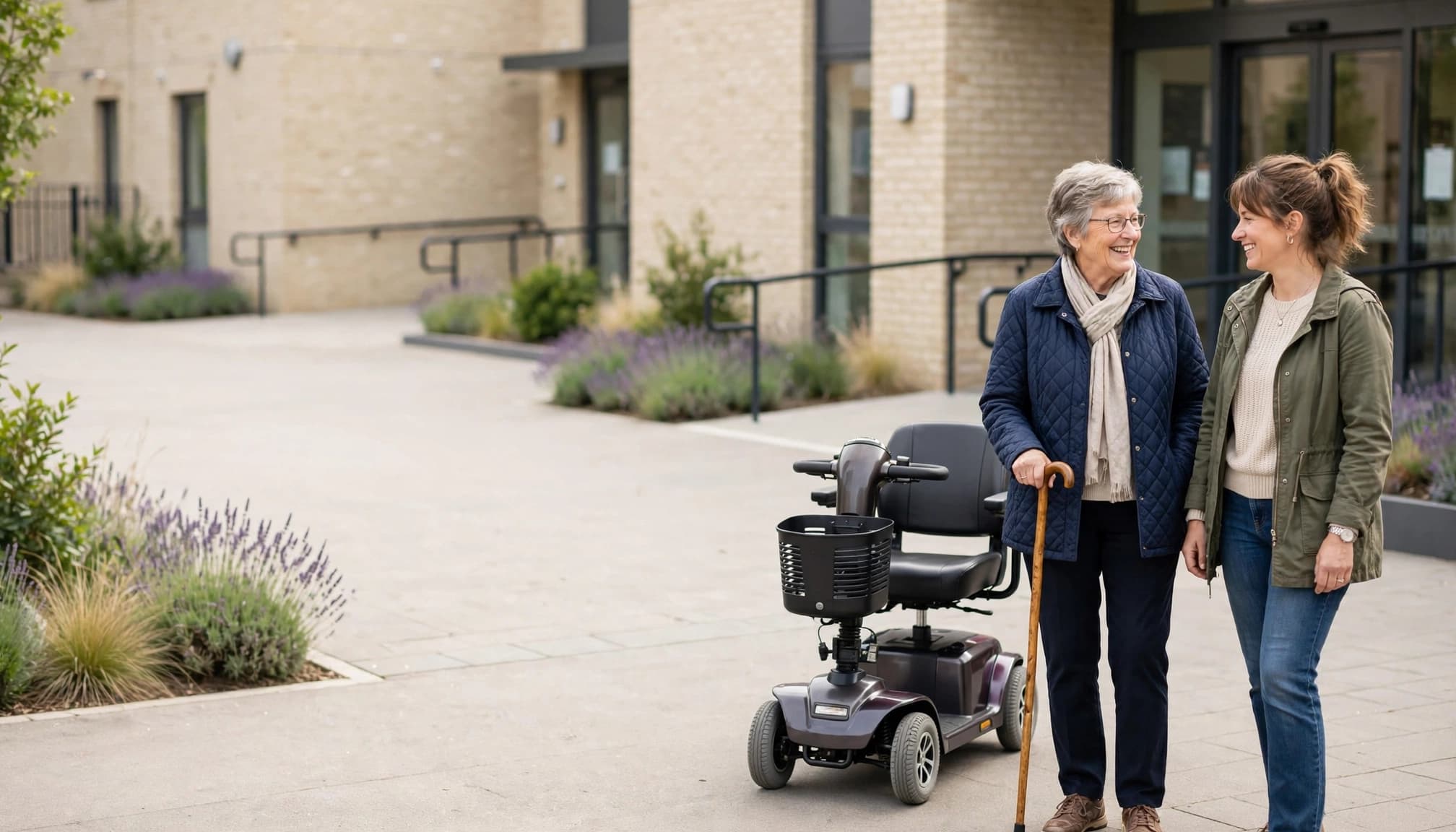
Keep entrances and corridors clear
Move slowly indoors and leave clear space for people using walking aids and wheelchair users. When you stop, check that people using walking aids can still pass.
Never park across an entrance, fire exit or corridor.
If your scooter cannot reach the consultation room, explain what assistance you need. Don't attempt an unsafe transfer or walk beyond your ability.
What can your GP or the NHS provide?
The NHS guide to mobility aids explains that scooters aren't generally available through the NHS. However, your GP can help identify other support.
Prices range from £15 for a walking stick to over £5,000 for a mobility scooter, based on the guide's approximate private-purchase figures.
| Mobility aid | Approximate price | NHS route |
|---|---|---|
| Walking stick | £15 to £50 | Some are available on loan |
| Walking frame | £40 to £200 | Some are available on loan |
| Manual wheelchair | From £150 | Wheelchair service assessment |
| Basic electric wheelchair | Around £2,000 | Assessment and eligibility criteria |
| Mobility scooter | £500 to over £5,000 | Generally bought privately or leased |
Ask a GP, physiotherapist or hospital staff about borrowing a walking stick or frame. A walking stick may suit some short-distance needs, depending on your balance and support requirements. A small deposit may apply, so check whether it's refundable.
For an NHS wheelchair, ask your GP, physiotherapist or occupational therapist for a wheelchair service referral. A wheelchair assessment considers your everyday mobility needs before provision.
Paying for a scooter through Motability or charity support
Use a qualifying mobility allowance
The Motability Scheme lets eligible people use their mobility allowance to lease a scooter or powered wheelchair. It isn't an NHS prescription or an exchange for an existing wheelchair.
Qualifying benefits include enhanced-rate PIP mobility and higher-rate DLA mobility. You normally need at least 12 months remaining on your award. Before committing, check which models available through the Motability Scheme suit your needs.
Our Motability scooter and powerchair leasing scheme offers choices with insurance, servicing, maintenance and breakdown assistance included.
Explore grants if leasing doesn't suit you
Charities may help towards buying a scooter, although eligibility and available funding vary. The NHS identifies Better Mobility as a source of charity listings.
A GP or occupational therapist can describe your mobility needs, but a referral doesn't automatically secure scooter funding.
Choosing a scooter for appointments and everyday journeys
Try several models before deciding, and visit mobility shops to compare seat comfort, steering effort and control placement in person. If arthritis affects your hands, check whether adapted control levers are available.
A compact pavement mobility scooter may suit car journeys and tight spaces better than a larger road model. A larger scooter may offer greater comfort outdoors.
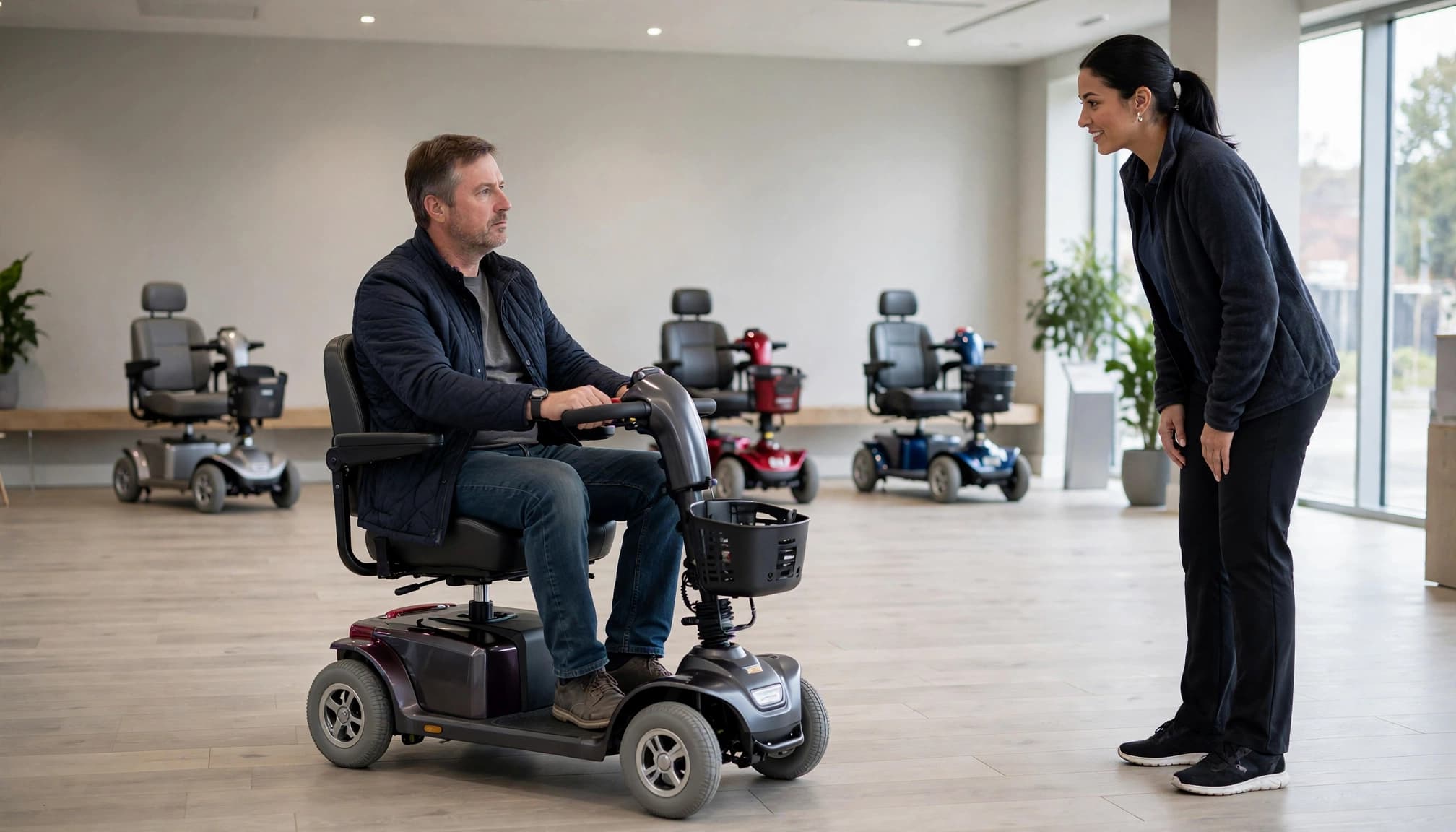
Buying on top speed alone is a mistake. Consider how often you'll travel, storage, charging and repair costs. For car transport, check the weight of the heaviest individual part. Prices range from model to model, depending on specification. For occasional use, compare whether to hire or buy; leasing may suit regular journeys.
A home assessment helps check doorways and turning space. Our 74-point service inspection covers batteries, tyres, brakes and steering, plus a road test. Factor aftercare into your buying decision.
Local advice near Harrow and Letchworth
As an award-winning dealer, we offer scooter comparisons and practical advice at Mobility World Harrow and Mobility World Letchworth.
Harrow advice covers families within at least a 10-mile radius, including Pinner, Stanmore, Wembley, Ruislip, Northwood and Edgware. Letchworth advice covers families within at least a 35-mile radius, including Hitchin, Stevenage, Bedford, Cambridge, Milton Keynes, Baldock, Royston and Biggleswade.
Bring details of your usual journeys, surgery access difficulties and any slopes or uneven paths. You can Contact Us to discuss a demonstration or home assessment.
Frequently asked questions
Do I need to register my scooter with DVLA?
Class 3 scooters require DVLA registration; Class 2 scooters don't. You don't need a driving licence for either class.
Under the government's mobility scooter rules, Class 2 scooters have a maximum speed of 4 mph. Class 3 scooters can reach 8 mph on roads, but must stay within 4 mph on pavements.
Can I borrow a scooter or wheelchair temporarily?
Check local availability and costs before deciding whether to hire or buy an aid. Shopmobility schemes lend scooters or wheelchairs for shopping, often free or at low cost, and use is generally limited to a defined shopping area.
The British Red Cross also offers wheelchair hire, commonly charged weekly. These options can help with temporary needs, although they aren't NHS scooter provision.
Plan access before choosing your scooter
Taking a scooter to your GP surgery depends on the building and the adjustments you need. Getting a scooter involves a separate decision about funding and suitability.
Prioritise safe access and comfortable control. A trial and a clear plan for your regular journeys will help you choose confidently.


