


Three-Wheel Vs Four-Wheel Mobility Scooters For Motability Users
A scooter that looks right in a showroom can feel completely wrong at your front door. The choice between three vs four wheel mobility scooters should begin with your daily route, comfort and the places you need to reach.
For Motability Scheme users, the best mobility scooter is the one that fits your body, home and local journeys. Start by considering how each wheel layout behaves in the real spaces you use.
Three vs Four Wheel Mobility Scooters: the practical difference
A three-wheel model has one front wheel and two at the rear. A four-wheel mobility scooter has two wheels at both the front and rear. This changes how the scooter steers, turns and feels on uneven ground.
For Motability Scheme customers, it’s important to compare the complete scooter specification, not just the wheel layout. A mobility scooter's turning radius varies by model, as does its overall feel and manoeuvrability.
This quick comparison shows the usual differences. Individual models can vary widely, so always check the manufacturer's figures.
| Feature | Three-wheel scooter | Four-wheel scooter |
|---|---|---|
| Turning circle | Often tighter | Usually wider |
| Foot space | Often more open at the front | Front wheel arches may reduce room |
| Outdoor feel | Best on smoother routes | Often steadier on uneven surfaces |
| Transport | Available in compact designs | Some models fold or dismantle |
| Maximum user weight | Model-dependent | Model-dependent |
A broader footprint may feel more reassuring because it can improve stability. Some listings use the term zero turn scooters for manoeuvrability, but you should still check the published turning circle, wheel layout and stability information.
A narrow turning option is useful, but it should never outweigh a secure, comfortable ride.
The right scooter is the one that manages your tightest doorway and your most difficult regular pavement.
Indoor turning, legroom and everyday errands
When a three-wheel mobility scooter makes sense
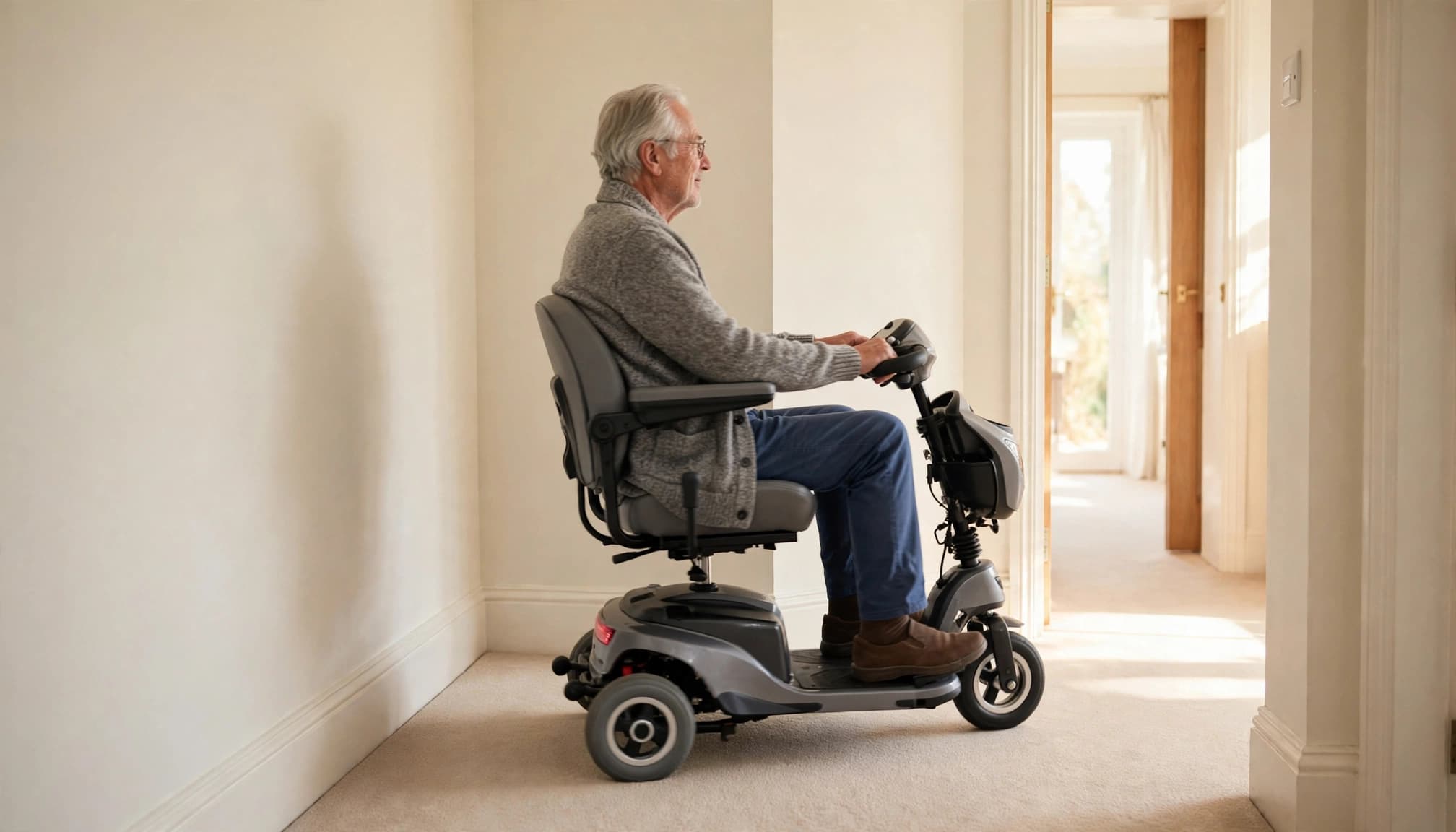
A three-wheel mobility scooter suits people who spend much of the day indoors or around compact shops. This layout can be useful for indoor use, helping it turn through narrow hallways, kitchen entrances and other tight spaces with less repositioning.
The open front area can also provide useful legroom for taller users or anyone who needs room to move their feet before standing. However, test the tiller position with your knees, especially when it's turned fully left or right.
Measure the places you actually use
Measure your narrowest internal doorway, hall corner, porch and shed entrance. Also check whether the scooter can turn around at the end of your hall without needing to reverse repeatedly.
Many customers focus on the width of a mobility scooter but forget its turning circle. A model can pass through a doorway yet still be awkward to manoeuvre once inside the room.
Outdoor stability on pavements and rougher ground
Why four wheels can feel more secure
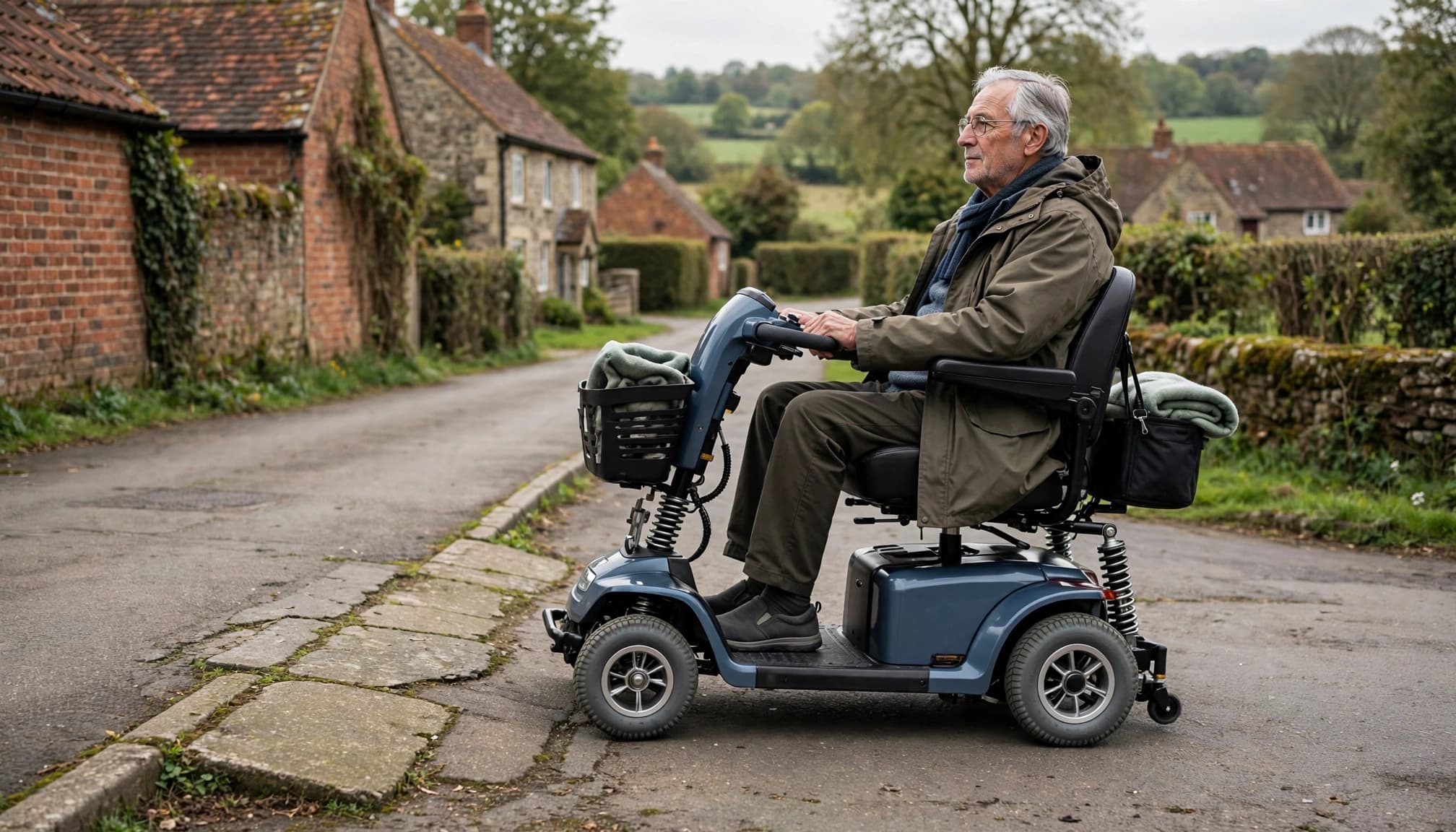
A four-wheel mobility scooter has a broader footprint, which may feel more reassuring during outdoor use. This can help users with poor balance or reduced confidence on cambers, dropped kerbs and uneven surfaces.
That doesn't mean every four-wheel model suits rough terrain, fields, gravel or steep slopes. Check the tyres, ground clearance, motor performance and stated gradient limit. Don't use any scooter beyond the conditions its maker approves.
Suspension and anti-tip wheels need a proper trial
A suspension system can soften vibration on cracked pavements, while anti-tip wheels may offer extra protection on inclines. Neither feature makes sharp turns, high kerbs or unsuitable slopes safe.
During a demonstration, try the route at walking speed. Notice how secure you feel when turning, stopping and travelling over the pavement outside your own home. Comfort matters because pain or fatigue can make steering harder later in the day.
Weight capacity, seating and control comfort
Check the complete load, not only body weight
The maximum user weight is a safety limit, not a rough guide. Allow for outdoor clothing, a bag, shopping, a walking aid and anything else carried on the scooter.
Four wheels don't automatically mean a higher capacity. Compare the exact product specification, and leave a sensible margin rather than choosing a model at its limit. If you're using the Motability Scheme, check the eligible model details and current allowance or package information before committing.
Sit in the seat for longer than five minutes
A supportive seat, suitable armrest width and an accessible tiller can matter more than wheel layout. Check your legroom and foot position, then turn the handlebars through their full range.
First-hand observations during assessments often uncover small but important problems. Spend time using the mobility scooter, as shoulder strain may develop when reversing or steering around a tight corner.
Folding, storage and fitting a scooter into a car boot
Some models are useful for family visits, holidays and appointments. A foldable mobility scooter collapses as one piece, while a portable mobility scooter may be lighter or dismantle into separate components. The heaviest component may still be difficult to lift safely.
A Motability Scheme choice still needs to suit your actual vehicle, storage space and lifting arrangements. Measure the car boot opening and floor, then check the folded dimensions and heaviest component. A hoist may be a better option for heavier equipment.
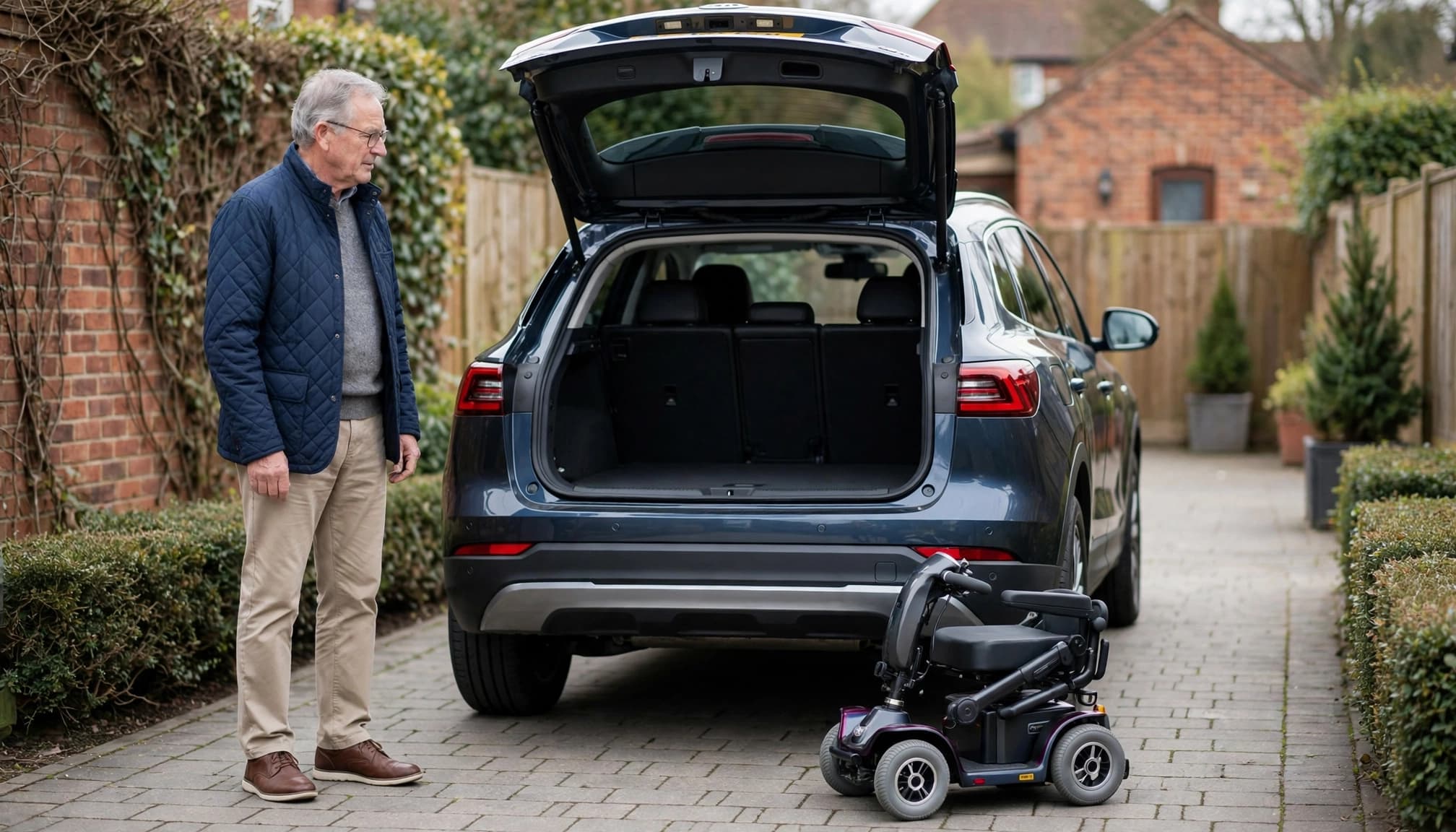
Storage needs equal attention. Batteries charge best in a dry, ventilated space with a suitable power point. Leave enough room to get on and off without twisting or reaching over obstacles.
Class 2 and Class 3 rules are separate from wheel count
Class 2 scooters for pavements
Class 2 scooters are limited to 4mph and are designed for pavement use. They can be three-wheel or four-wheel models, so don't use wheel number as a guide to legal classification.
A compact three-wheel scooter may be an excellent Class 2 choice for local shops and indoor access. A four-wheel Class 2 model may better suit a pavement route that feels uneven.
Class 3 scooters for longer outdoor journeys
Class 3 vehicles have a maximum speed of 4mph on pavements and can travel at up to 8mph on the road. A class 3 scooter must be registered with the DVLA and have road-use equipment, including lights, indicators, a horn, mirror and speed indicator.
Check the legal class for the exact mobility scooter model you're considering, rather than relying on its wheel count. The Motability Scheme's guide to how leasing works explains the support included with a lease. Motability Scheme rules, availability, prices and package details can change, so check the current guidance before deciding. Still, you must choose a scooter that suits the journeys you plan to make and follow the applicable road rules.
Use a home assessment to avoid costly mistakes
Questions customers regularly raise
At Mobility World Letchworth & Mobility World Harrow, families often ask whether a mobility scooter will clear a garden gate, fit beside the kitchen table, or manage a familiar route.
Mobility World is an award-winning dealer with more than 34 years of experience. Home assessments cover a minimum 10-mile radius around Harrow and a minimum 35-mile radius around Letchworth. Depending on your location, this may include areas such as Pinner, Ruislip, Stanmore, Edgware and Wembley, or Hitchin, Baldock, Stevenage, Royston, Welwyn Garden City and St Albans.
A home visit lets you assess access, storage and your usual route in person. It can also reveal how busy Harrow pavements, dropped kerbs and slopes compare with the more open, rural routes around Letchworth.
What servicing experience can reveal
A scooter needs regular attention after delivery, especially if it travels outdoors in wet weather. Mobility World's servicing checks cover batteries and connections, tyres, brakes, steering adjustments and a road test as part of its 74-point inspection process.
The Motability all-inclusive lease package through the Motability Scheme includes insurance, servicing, routine maintenance and breakdown cover. Before you choose, check current availability and prices through Motability's scooter and powered wheelchair updates.
You can also browse the Motability Scooter & Powerchair Leasing Scheme to compare eligible options before arranging a demonstration.
Frequently asked questions
Are three-wheel mobility scooters safe outdoors?
A three-wheel mobility scooter can suit smooth outdoor routes when used within the model's limits. If your route includes rough pavements, cambers, dropped kerbs or loose surfaces, stability may be a concern.
Which scooter has the better turning radius?
A three-wheel layout often turns more tightly, making corridors, small shops and indoor spaces easier to manage. Check the model specifications, as the exact turning circle varies.
Can a four-wheel mobility scooter fit in a car boot?
Some models fold or dismantle for transport, while others are too large or heavy for practical loading. Measure the car and scooter, then consider who will lift it.
Does four-wheel design mean a higher weight capacity?
Not necessarily. Check the complete model limit, including the user and any items carried, rather than assuming four wheels provide a higher capacity.
How does the Motability Scheme affect my choice?
You need a qualifying mobility allowance with at least 12 months remaining. A dealer can help compare options, arrange a demonstration and complete the application. For local advice or a home visit, Contact Us.
Choose the scooter that fits your life
Three-wheel scooters can make indoor use feel easier, while four-wheel models often bring more confidence on varied outdoor surfaces. Your outdoor route, seating comfort and storage space should guide the decision.
A proper test drive turns a broad comparison into a personal answer. The best three vs four wheel mobility scooters choice is the mobility scooter you can use safely and comfortably every day.
Check current Motability Scheme information before deciding, then match your choice to daily needs, storage, comfort and route conditions.


