


Mobility World guide • UK rules • Motability Scheme • Trading since 1990 • Harrow & Letchworth showrooms
Motability Scooters for Local Shopping Trips: A Buyer's Guide
The Quick Answer: For local errands, a compact Class 2 pavement scooter suits short, familiar routes to the chemist or shops, a folding scooter works best if you travel by car, and a Class 3 road scooter is better for longer trips that include road sections. Eligible customers can lease a new scooter through the Motability Scheme, with insurance, servicing, repairs and breakdown cover included, while personal purchases need comparison of ongoing running costs. The right choice always depends on your route, storage space, doorway width and the shopping load you carry.
An ordinary trip to the chemist or local supermarket can feel out of reach when walking leaves you tired, sore or unsteady. A scooter should make that route familiar again, rather than add new worries.
For people living with a disability, mobility scooters can support independent living on familiar errands. They can reduce the need to rely on someone for every lift, but the right choice depends on your pavement, storage space, shopping load and confidence at the controls.
Start with the route you use most, then match its demands to the scooter.
Expert advice on mobility scooters starts with the route
An expert recommendation begins with the journeys you make, not a glossy specification. Before a test drive, note the doorway, pavement, kerbs, local shops and any car journey. Test the scooter on this route, rather than only completing a showroom lap. If a dealer offers a free trial, ask to use it for your normal journeys.
Measure the awkward bits first
Measure the narrowest doorway, shed entrance and path. Check that a charged scooter can turn there without squeezing past bins or scratching paintwork. During a first-hand trial, take the route to the nearest shop, including the dropped kerb and entrance.
One frequent mistake is choosing a scooter because it fits a brochure measurement, then finding the tiller or front basket reaches further than expected. Also check for a dry location for the battery charger near a socket, where the lead won’t cross a walking route.
Comfort and stability matter every day
Seat comfort matters on a 20-minute errand as much as a longer outing. Check seat height, back support, arm position, leg room and the effort needed to operate the tiller, brake and reverse.
If tremor or reduced grip affects one hand, try every switch rather than assuming the layout will work. A family member who may load the scooter into a car should also try lifting the heaviest piece.
Choosing the best Motability scooters for local errands
No design wins every comparison. When comparing mobility scooters, turning space, range and carrying capacity matter more than maximum speed on most shopping routes.
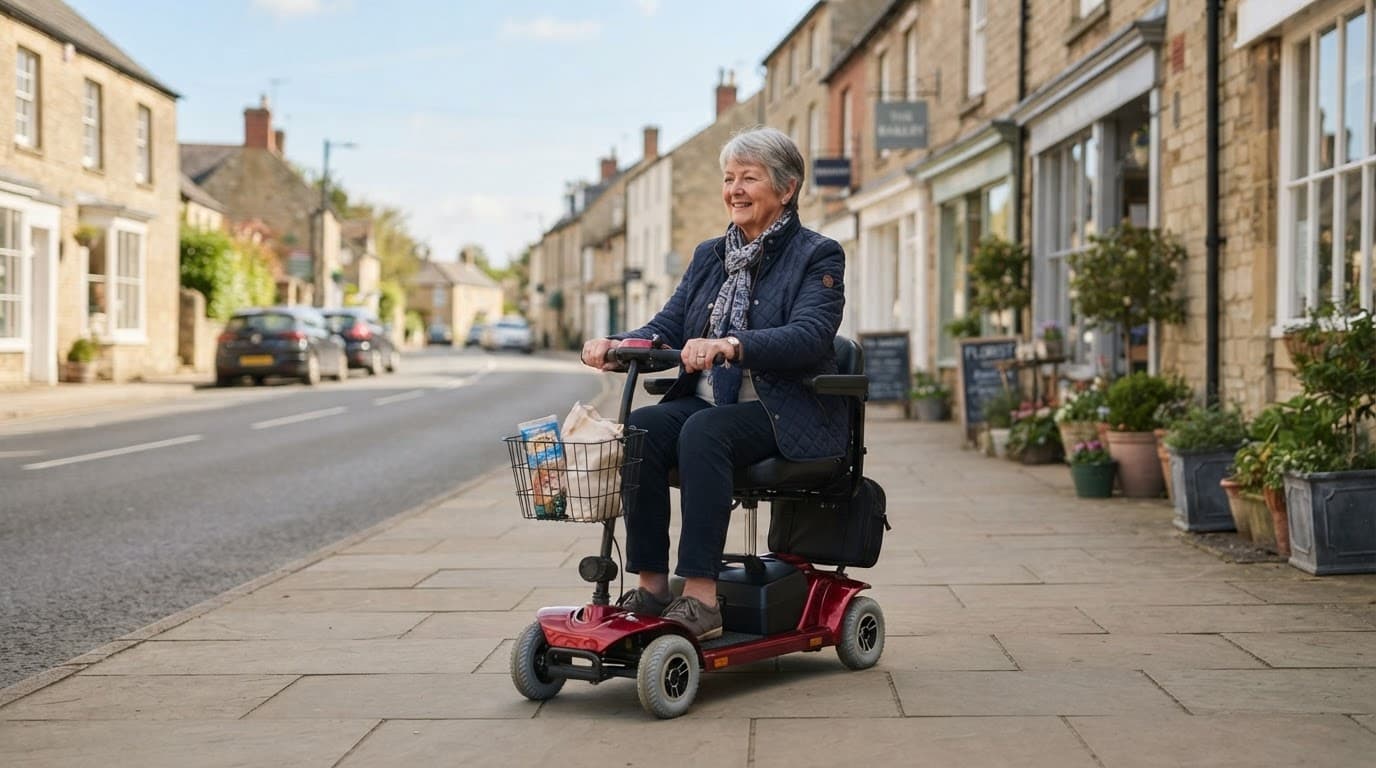
Compact Class 2 scooters for nearby shops
A Class 2 mobility scooter suits pavement journeys, travelling at up to 4 mph. These pavement scooters fit more easily in chemists, community centres and supermarket aisles. A secure shopping basket is useful for small grocery or chemist trips.
Check the maximum user weight and basket limit before choosing one. A stable four-wheel layout can also feel more reassuring when the basket is full of groceries.
Folding mobility scooter options for car journeys
Folding models suit people who regularly travel by car, but folding is not the same as effortless lifting. Car boot scooters require checks on the boot opening size, the heaviest component and whether the scooter stays stable when reassembled.
Travel scooters often quote around 10 to 15 miles per charge in favourable conditions. Cold weather, gradients, user weight and full shopping reduce the practical distance, while battery capacity can limit longer journeys.
Class 3 scooters for wider local trips
A Class 3 mobility scooter can reach 8 mph on the road and usually has larger wheels, lights and a more supportive seat. Road scooters suit longer journeys where a road section is unavoidable.
However, their wider turning circle, heavier batteries and higher speed may be inconvenient in small shops, tight hallways and car boots. Faster is not automatically better for a weekly shopping run.
Motability leasing and buying: know the difference
People receiving a qualifying mobility allowance can explore Mobility World's Motability Scooter & Powerchair Leasing Scheme, rather than buying a model outright. It offers eligible customers access to new mobility scooters and powered wheelchairs through the Scheme.
Eligibility and lease length
Qualifying awards include the enhanced mobility part of PIP, higher-rate mobility DLA, War Pensioners' Mobility Supplement, Armed Forces Independence Payment, and Scotland's Adult or Child Disability Payment. Normally, at least 12 months must remain on the award.
The same qualifying-award route can apply when powered wheelchairs are being considered.
Most scooter leases run for three years. A dealer can explain the ordering process, but Motability confirms eligibility and current terms.
Scheme lease or personal purchase?
Lease packages include insurance, servicing, maintenance and repairs, plus breakdown support, so routine costs are easier to budget. Before ordering, confirm the warranty and support terms with the dealer. Ask what home delivery, setup and handover support are included.
At the end, return the product or arrange a new lease if you remain eligible.
Only new products are available through the Scheme. If you buy independently, an approved used scooter may cost less upfront, but compare finance options by checking the total amount payable, interest and ownership costs. Also budget for cover, servicing and repairs, and check whether a qualifying product attracts VAT relief.
Legal rules for local travel
Rules are part of choosing well, because the quickest route is not always permitted.
Class rules, driving licence and registration
GOV.UK's vehicle class guidance confirms that a Class 2 mobility scooter is pavement-focused, and pavement scooters have a 4 mph limit. A Class 3 mobility scooter has an 8 mph maximum speed on the road, but road scooters must drop to 4 mph on pavements.
You don't need a driving licence for either class. A Class 3 user must be at least 14, and the scooter needs free DVLA registration. Road users must also follow the Highway Code.
The 4 mph pavement limit still applies when a Class 3 scooter can travel at 8 mph on the road.
Insurance, routes and VAT relief
The government's insurance and registration guidance says this cover isn't a legal requirement for Class 2 or Class 3 vehicles, although it's recommended. Class 3 scooters can't use motorways, bus lanes or cycle lanes.
Eligible disabled people may claim the relief when buying a qualifying 4 mph pavement scooter for personal use. Read HMRC's VAT relief rules and complete the supplier's declaration before payment.
A proper test drive prevents costly mistakes
A showroom ride is useful, but a home assessment shows whether a scooter turns through your doorway, parks beside a charging point and copes with your real route to the shops.
Real customer questions during a demonstration
At a first-hand trial, take your usual coat, bag and the kind of shopping you normally carry. Ask whether an at-home free trial is available, and use ordinary shopping items if it is offered. A mobility adviser can watch posture, braking and turning, while a family member checks control access, lifting and reassembly on travel scooters or car boot scooters.
- Can I reach every control without straining?
- Does it turn safely at my gate and local shop?
- Can my family lift it, or should it stay assembled?
Do not settle for a brief showroom lap if your route includes slopes or tight doors. This check is more useful than choosing by colour or top speed.
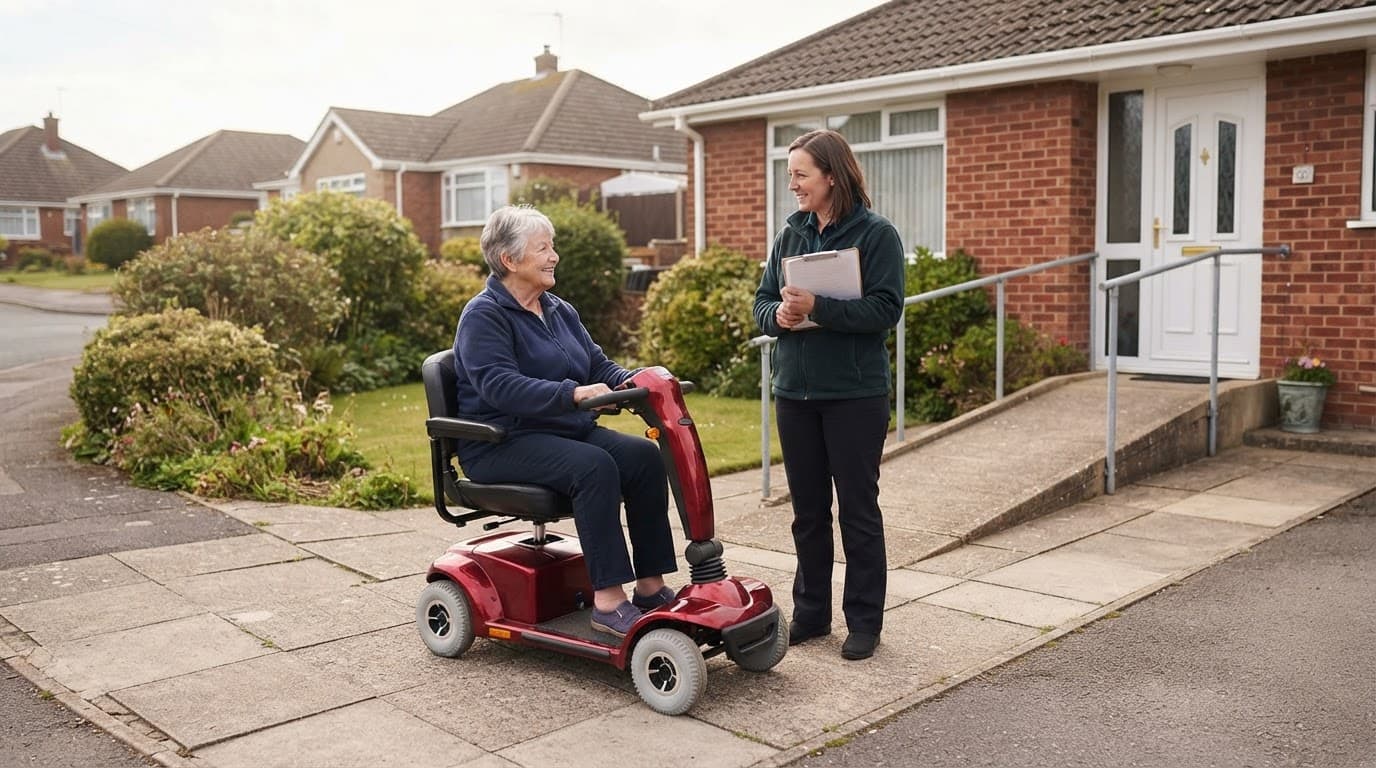
Local assessment and servicing support
Mobility World is an award-winning dealer with personal advice, demonstrations and home assessments. Mobility World Harrow, at 78-80 Station Road, HA1 2RX, supports addresses within a 10-mile radius.
Mobility World Letchworth, Birds Hill, Letchworth Garden City, SG6 1HX, offers home assessments across a 35-mile radius. That reaches many families in Hertfordshire, Bedfordshire and north London.
If home delivery is available, confirm the setup and handover arrangements, then ask what support the warranty provides. Servicing includes a 74-point inspection of batteries, connections, tyres, brakes and steering, followed by a road test. For an assessment or a practical conversation about your route, Contact Us.
The right scooter keeps everyday plans within reach
Shopping shouldn’t depend on finding a lift or pushing through pain for every short journey. Match the scooter to the route you know, test it with normal luggage, and choose support that remains useful after delivery.
The most practical scooter is the one you’ll use comfortably on an ordinary Tuesday morning, not simply admire in a showroom. With the right fit, everyday mobility can make regular errands feel like a familiar part of the week.
Ready to find the right scooter for your local routes?
Browse our range online, call our team for advice, or arrange a home assessment with your usual shopping route in mind.
Frequently asked questions about Motability scooters
Can I test drive before leasing or buying?
Yes. Try a scooter in a showroom and, where available, at home. A home demonstration is especially useful when storage, a narrow entrance or a sloping path might influence the choice.
Do I need a driving licence or insurance?
A licence isn't required for these scooters. Insurance is optional by law but sensible for private ownership, while a Motability lease includes it as part of the package.
How far can a mobility scooter travel on one charge?
Compact travel scooters often manage around 10 to 15 miles per charge. Bigger road scooters can offer roughly 25 to 40 miles, although hills, temperature, tyre pressure, user weight and shopping affect the result.
Can I take a scooter on a plane or holiday?
Speak to the airline before booking. Provide the make, battery type and capacity, including whether it uses lithium batteries, and confirm airline approval, carriage rules, airport assistance and the return journey.
What finance options are available, and can I lease a used scooter?
Used scooters can't be leased through the Motability Scheme. Personal finance may be available for a purchase, but compare the total amount payable with the continuing costs of ownership.
Final step: compare scooters and book locally
Shop Pavement Scooters | Shop Road Scooters | Motability Options
For local support: Mobility World Harrow hub and Mobility World Letchworth hub.
Expertise Verified By: PS
Reviewed by the Mobility World Specialist Team
Based on 35+ years of hands-on experience in our Harrow and Letchworth showrooms, Buy with Confidence trading standard approved, and Driving Mobility PWMS trained and approved


